
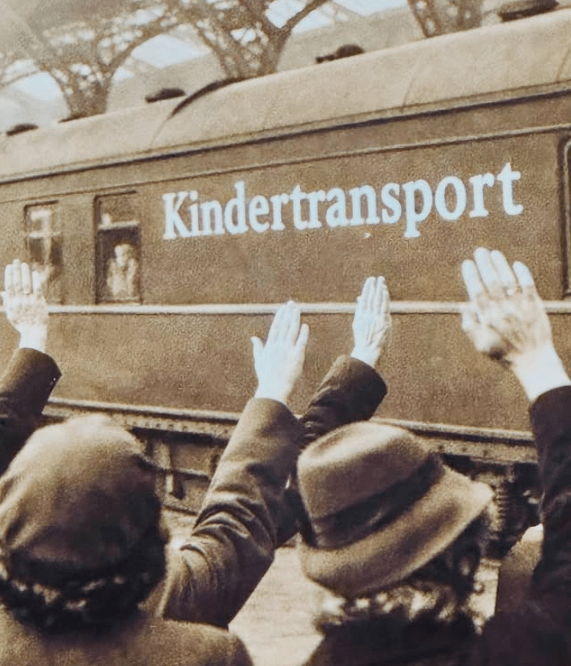
On December 1, 1938, 196 children boarded a train in Berlin, Germany with nothing but a bag of belongings and a name card hung around their neck. Most of these children would never see their families again. 88 years later, the daughter of one of these children is determined that their stories will not be forgotten.
When Rita Rimalower-Nettler was 15 years old, she boarded a Kindertransport train in Leipzig, Germany to escape the dangers she faced living as a Jew in Nazi Germany. The plan was for her to live with a family in Glasgow, Scotland until her parents could escape and join her. “I boarded the train and that was the last time I ever saw them, my brave, brave parents,” Rimalower-Nettler wrote in her memoirs. “I’m absolutely certain that they knew what was to be and it was only many years later that I fully understood what our parting had cost them.”
Rimalower-Nettler spent the rest of her life in London, UK. After her passing in 2008, her daughter, Michele Gold, dedicated her life to researching the Holocaust and the Kindertransport program, and sharing the stories of survivors like her mother to ensure the horrors they faced and overcame are never forgotten.
The Kindertransport Program
From November 9-10, 1938, Jewish stores and homes across Germany were destroyed – their windows smashed to pieces, and some set on fire or plastered with anti-semetic graffiti. Their occupants were dragged out and beaten on the streets. This night became known as “Kristallnacht”, or “The Night of Broken Glass”, and was one of the first major events to draw international attention to the danger German Jews faced under Adolf Hitler’s new regime.
Through negotiations by Jewish organizers in both Germany and abroad, Great Britain agreed to take in Jewish child refugees, and the Kindertransport program was founded. Children under the age of 17 boarded trains by the hundreds and were taken to ports in Belgium and the Netherlands. There, they would board ships that would take them to Great Britain where they would be taken in by British families or sent to boarding schools, monasteries, hostels, and even castles that were temporarily turned into homes for refugee children.
Over 10,000 children fled Germany and its surrounding countries through the Kindertransport program, very few of whom managed to be reunited with their families after World War II. A majority of the parents and families who placed their children on the Kindertransport trains eventually became part of the six million Jews who were murdered in ghettos or concentration and labor camps.
Memories That Won’t Go Away
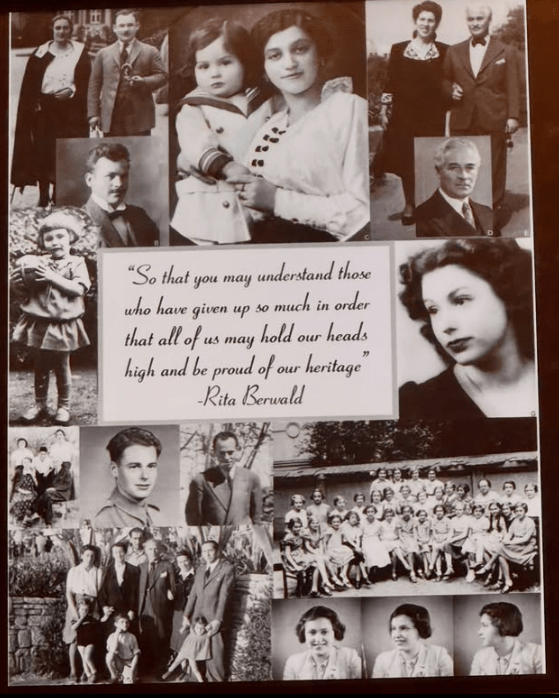
Michele Gold, daughter of Holocaust survivor and Kindertransport child Rita Rimalower-Nettler, didn’t grow up hearing about the Holocaust. According to Gold, “my mother rarely allowed herself to think about her past; it was too painful for her. For her, there were memories that would never go away.” After her mother’s death in 2008, Gold began working at the Los Angeles Museum of the Holocaust, inspired by what little she knew of her mother’s story. In collaboration with Holocaust survivor and artist Gabriella Karin, ‘A Tribute to the Children of the Kindertransports’ opened as an exhibit at the Los Angeles Museum of the Holocaust in February of 2011.
“After the success of the exhibition, I reflected more deeply on my mother’s journey to safety on a Kindertransport out of Leipzig, Germany, and the terrible fate of my maternal grandparents,” Gold wrote in the forward to her book. “I was inspired to document more fully the stories of the actual people symbolized in Gabriella’s train sculptures, to create this keepsake for future generations.”
“Memories That Won’t Go Away” documents the story of over 600 Kindertransport children, or “Kinder” as they’re referred to in the book (the German word for “child”). Gold also includes short biographies of adults labeled “Kindertransport Rescuers” to honor the adults who risked their lives to move the children to safety.
“I started my research in 2008, so it was before email became widespread so most local and long distance communication happened through handwritten or typed letters,” Gold said in an interview. “It was a very lengthy process. I wrote to synagogues, museums, the Kindertransport Association, World Jewish Relief… very soon after I was receiving photos and stories and numerous transcripts from all over the world from Kinder entrusting me to use and tell their most private memories.”
From the Page to the Classroom
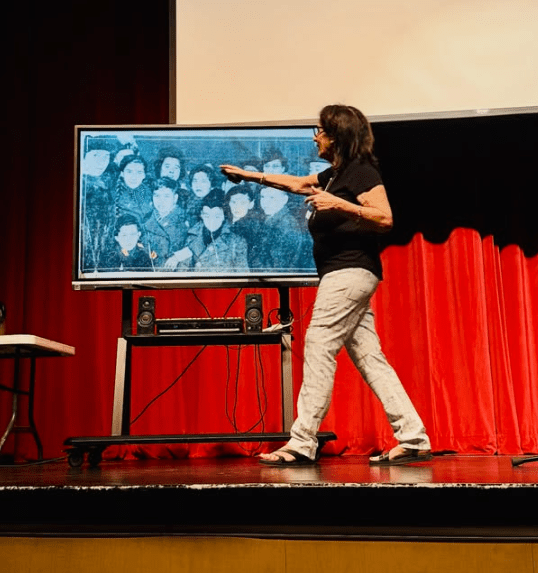
Soon after the publishing of her book, Gold began bringing her stories to middle and high schools in the Los Angeles area, eventually expanding to schools and colleges on an international scale. Gold’s presentation tells her mother’s story, along with the stories of other Kindertransport children, and reminds the audience of the importance of not letting history be forgotten. “Often I am surprised by the level and thoughtfulness of their questions,” Gold says of the students she’s spoken to. “In some cases they appear to have related so well and understand so well the plight of these children.”
Gold plans to continue to expand her program to schools and communities both in the United States and internationally. Her goal is to ensure the memories and stories of children that overcame the worst humanity has to offer will never be forgotten, and that their stories will encourage others to do their part to make the world a better place so situations like the Kindertransport program are never again necessary.
To finish every talk, Gold uses a quote by the late Chief Rabbi Johnathan Sacks: “We can’t change the past, but each of us, by challenging prejudice and intolerance, can help change the future.”
 Ryann's Story Studio