
For the first time since 1994, the United States will be hosting the FIFA World Cup in conjunction with Canada and Mexico, making this year’s tournament the first three-nation World Cup in FIFA history.
However, even before teams start arriving and stadiums fill with fans, issues have begun to arise around who exactly will be allowed to attend the matches due to the recent U.S. crackdown on border patrol and international travel.
As of the time of this article’s publication, the United States Government’s travel ban policies affect 39 countries with varying levels of visa restrictions. With 78 of the 104 scheduled matches set to take place in the U.S. and athletes and team members having to enter the U.S. through international airports using passports or visas, these travel bans have created concern around what accommodations, matches, and travel between cities will look like.
48 countries have qualified to compete in the FIFA World Cup. Of those 48, four currently are subject to some form of travel restrictions under Trump’s most recent travel ban:
Full Travel Restrictions:
Haiti
Iran
Partial Travel Restrictions:
Senegal
Côte d’Ivoire
As of June 7, 2026, the U.S. government announced they would allow the Iranian team to enter the country only on days they would be competing, but they would not be allowed to stay past the end of each match, including for overnight stays.
“We can enter in the morning, and we must leave in the same day,” Iran’s envoy Abulfazl Pasandideh told reporters.
The Mexican government has offered to let the team stay in Tijuana when not in the U.S. competing.
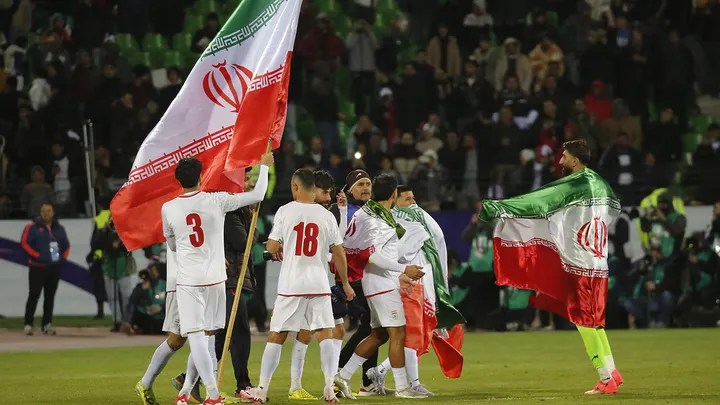
“The United States does not want the Iranian team to stay overnight, but they are going to play three matches there,” said Mexican President Claudia Sheinbaum during a press conference. “So they asked us: ‘Can they stay overnight in Mexico?’ And we said: ‘Yes, no problem.’”
The three matches the Iranian team is currently scheduled to play during the first round of the World Cup will take place in Los Angeles, CA and Seattle, WA.
For the Haitian team who also come from a country on the fully restricted travel list, the team and coaches will be allowed to enter and stay in the U.S. during the tournament, but no fans will be approved to travel. Haiti has only qualified for the FIFA World Cup twice in the competition’s history – for the first time in 1974 and now in 2026, making this year’s games a big deal for fans who will now be forced to cheer on their team from home.
For the last four World Cups, host countries have designed special visa systems for teams and fans, meaning visa approval still wasn’t guaranteed, but was made more accessible for those wishing to attend the games. Canada and Mexico, joint hosts for this year’s games with the U.S., have not issued specific travel bans for any countries other than Canada issuing a travel ban for the Democratic Republic of the Congo to prevent spread of the recent Ebola outbreak in Africa.
Iranian and Haitian fans aren’t the only ones struggling to get approval to attend the games in the U.S. Abu Kass, head of the Jordanian football fan association, said he took more than 42 documents with him to his visa appointment, only to get rejected without being given a reason.

“They’ve been rejecting people over the past three to four months,” he told BBC News. The Jordanian supporters association in the U.S. told the BBC they only know of one Jordanian fan who has been approved for a visa to see the games.
Many FIFA fans have said one of their favorite parts of the annual competition is seeing so many people from different cultures and backgrounds come together for one united interest. However, under the new restrictions and laws of the Trump Administration, it is likely this year’s games will look much different from any games we’ve seen before.

