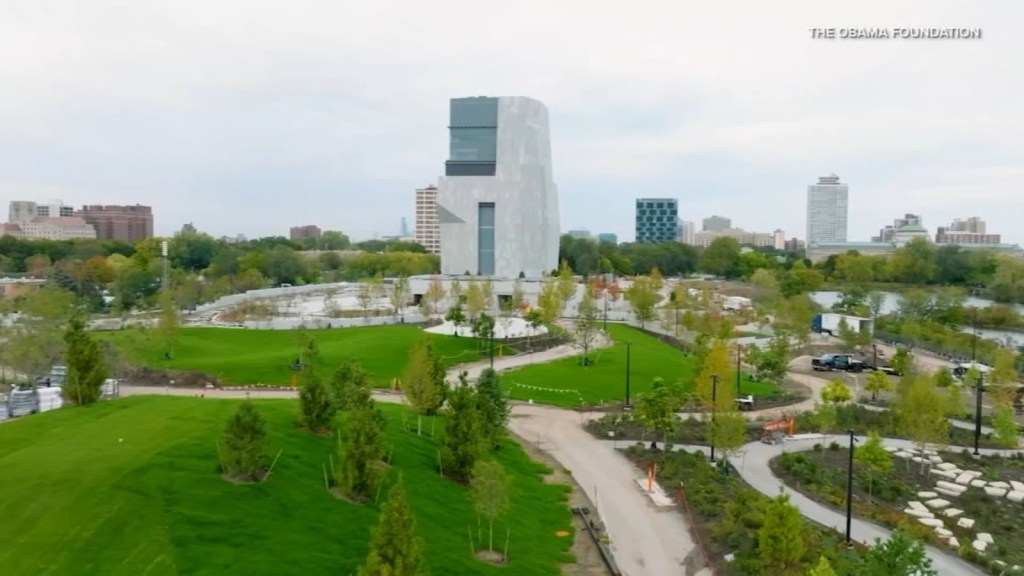
This past Friday, Juneteenth 2026, the Obama Presidential Center (OPC) finally opened to the public over a decade after President Obama left the White House in January 2026. The OPC, which first became a concept in 2017 and began construction in 2021, is located in Chicago’s South Side where Obama’s political career began.
“We want this center to be more than a static museum or a source of archival research,” President Obama said at the groundbreaking for the site in 2017. “It won’t just be a collection of campaign memorabilia or Michelle’s ball gowns, although I know everybody will come see those. It won’t just be an exercise in nostalgia or looking backwards. We want to look forward.”
The OPC is a 19.3-acre campus featuring a museum, an Oval Office replica, a basketball court, a branch of the Chicago Public Library, a kitchen/dining area, numerous gardens and outdoor walking and eating areas, a playground, an auditorium, and countless pieces of artwork created or made in honor of notable African and American artists and public figures.
Why a Presidential Center, not a Presidential Library?
The first Presidential Library was created by President Franklin D. Roosevelt in 1938 on his estate in Hyde Park, New York. The idea was that it would be a place for all of the papers, books, memorabilia, gifts, and more that he had collected during his time as president to be preserved and made available to the public. Since Roosevelt, 13 other presidents have established Presidential Libraries including Dwight D. Eisenhower, John F. Kennedy, Richard Nixon, Ronald Reagan (a full list and the location of the libraries can be found at the end of this article).
In 1955, Congress created the Presidential Libraries Act, officially establishing a system of privately owned and federally maintained facilities used to preserve, document, and display records, papers, and other historic materials for each presidency. The President is able to choose where he’d like his library to be located and, before the 1978 Presidential Records Act, what materials would be available to be displayed and recorded.
Some of the newer libraries have made some of the documents and records available online as well, allowing digital visitors from all over the world to take advantage of their resources.
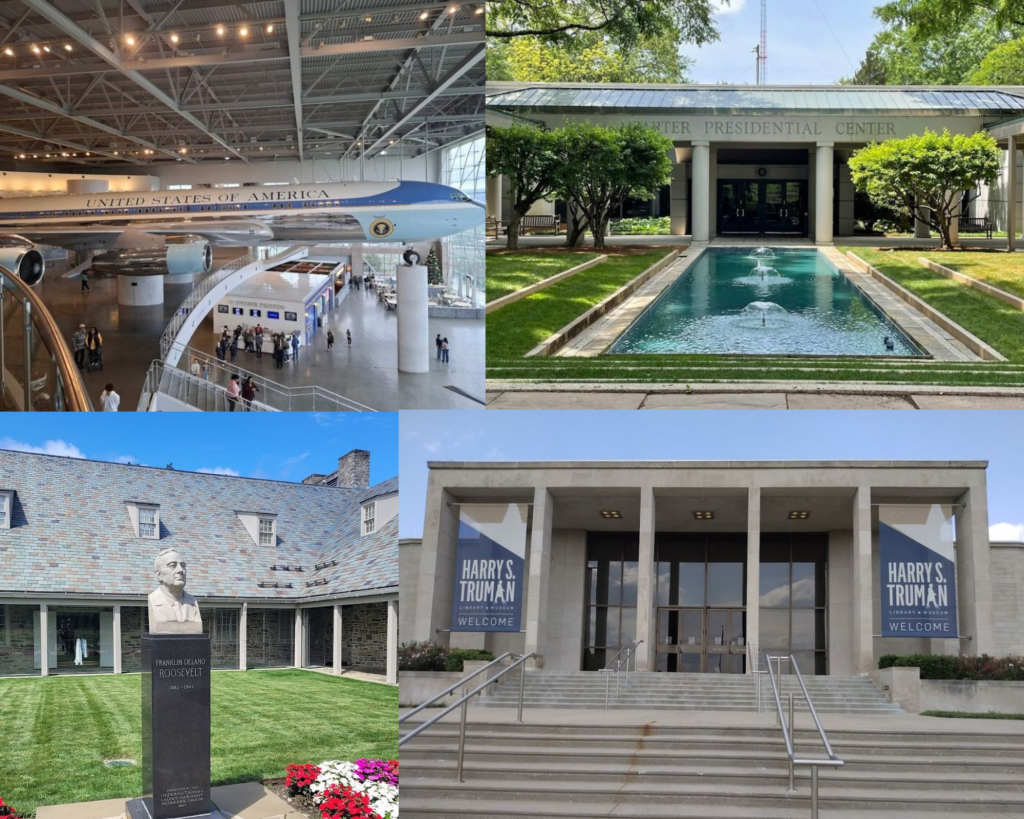
Originally, the Obama President Center was also supposed to be a Presidential Library. However, in 2017 Obama decided to switch the project to a Presidential Center, removing it from the control of the National Archives and Records Administration (NARA) who normally is in charge of the libraries. This decision was due to a number of different reasons including saving the Obama Foundation from having to fundraise the extra tens of millions the NARA was asking for, and allowing Obama to have full control over the design and layout of the center; staying with the NARA would have meant conforming to their strict architecture and design standards.
The Obama Foundation is still paying the NARA millions of dollars to digitize the over 25 million paper documents and 35,000 artifacts from Obama’s two presidential terms, making Obama the first “digital” president with all of his records from his time in office available on the National Archives websites.
What’s in the new Presidential Center?
The Obama Presidential Center was designed around the same ideas that shaped Obama’s presidency: community, democracy, and togetherness.
In a speech at the OPC grand opening ceremony, former first lady Michelle Obama said she hopes the campus can serve as a “respite” when the world feels “upside down”.
“We want you to come here and put away your phones, and talk and laugh and cry – because you gonna cry – and make new friends,” she said in her speech. “Get your hands dirty in my garden. Push your baby on a swing in the playground. Have a romantic picnic on the Great Lawn. Because that’s the work of democracy too: being neighborly, taking care of public spaces, having some fun, enjoying each other, shaking out of the isolation and division that have crept too deeply into our lives.”
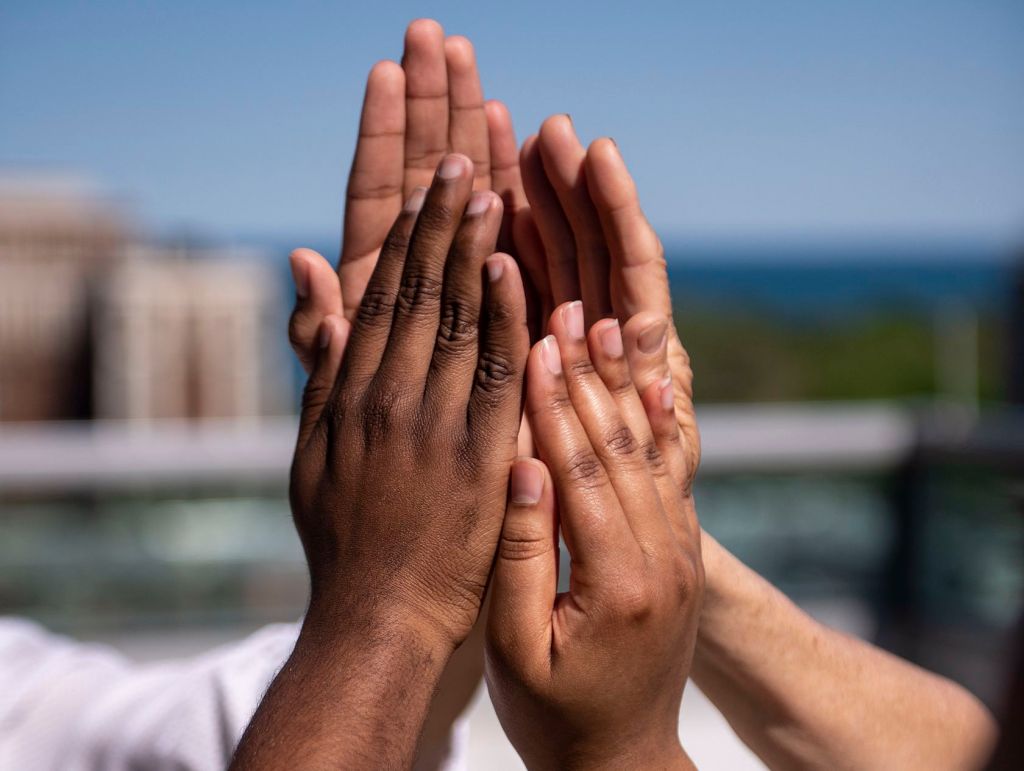
The tower at the center of the campus is designed to resemble four hands coming together. The 19.3 acre campus contains multiple homages to political figures and activists from around the world who inspire the Obamas, including Eleanor Roosevelt, Elie Wiesel, Eunice Shriver Kennedy, Rachel Carson, and more.
The OPC also has a number of outdoor areas, including an ADA accessible playground, a wetland walk, a water terrace named in honor of Obama’s mother, Ann Dunham, picnic tables, barbecues, and a fruit and vegetable garden symbolic of the garden Michelle Obama had at the White House as part of her work to promote healthy eating and nutritional school lunches across the country.
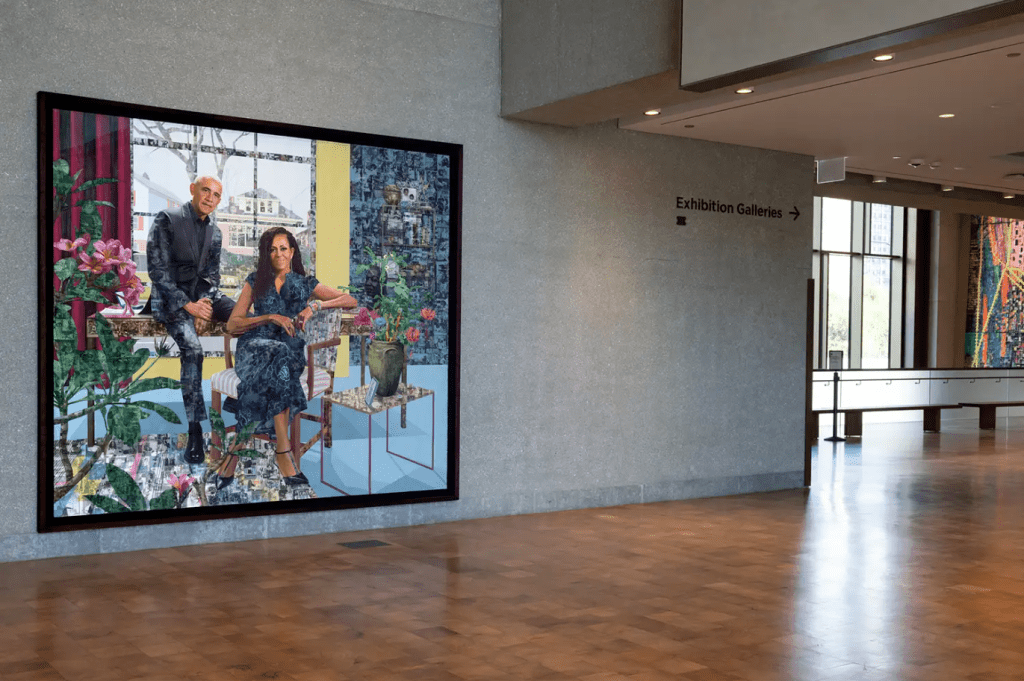
The main building has a number of areas to it as well, including a replica Oval Office from Obama’s time a president, a display of Michelle Obama’s dresses, a branch of the Chicago Public Library, and a basketball country, a nod to the time Obama temporarily modified the White House Tennis area into a basketball court to honor his favorite game.
The tower also contains the Obama Presidential Center Museum, which is the only area of the campus that costs money to enter. The space honors moments in American history that paved the way for Obama to become the first African American President of the United States.
The campus is also filled with artwork created by primarily African and African American artists including Alison Saar, Mark Bradford, Maya Lin, Idris Khan, Julia Mehretu, Mjideka Akunyili, and many more.
Records from Obama’s presidency can be found online on the National Archive’s Barack Obama Presidential Library Website.
No matter your opinions on Obama’s presidency, most can agree that his time in office left an impact on the country. His legacy and efforts in pushing the United States further toward the ideals of community, democracy, and togetherness will now be preserved at the Obama Presidential Center for many generations to come.
“As long as I live, I will never forget that in no other country on earth is my story even possible… But it is a story that has seared into my genetic makeup the idea that this nation is more than the sum of its parts—that out of many, we are truly one.” – Barack Obama
Click here to access the National Archives Obama Presidential Library Website.
Click here for a full list of Presidential Libraries and their locations.

