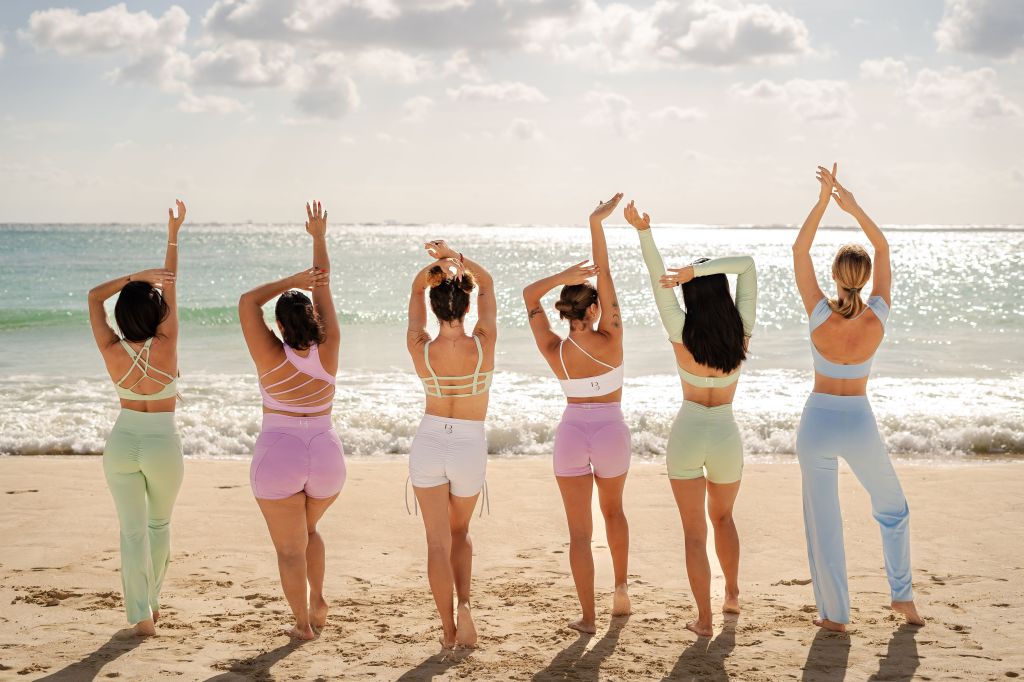
For most kids, summer is the best season of the year. Three whole months of no school, no homework, and nothing to do but spend all day playing with your friends and wreaking havoc around the neighborhood. The kid with the most friends is no longer whoever was the most popular at school but the one who has the biggest pool in their backyard.
If summer was all of our favorite seasons in grade school, when exactly did that end? When did we stop counting down the days until beach vacations and stop looking forward to showing off our colorful new bathing suits to all our friends?
For me, it all began (or rather, ended) when I started hearing about what my body should look like and realized I didn’t fit those standards. Suddenly, I switched to wearing loose two-piece suits instead of bikinis or one pieces so no one could see that I didn’t have a flat stomach. I wore athletic shorts in the pool instead of bathing suit bottoms so more of my legs would be covered because all the girls at school kept talking about a thigh gap, which I didn’t have.
Going to the pool with my family became less about having fun and cooling off on a hot day and more about figuring out how I could make myself look as skinny as possible in tight fitting clothing.
Mine was not a one-off experience. I’ve had numerous friends share the same stories from their teenage years and even now as adults, many of us are still struggling to break away from what we were taught is the “ideal” body shape and just enjoy who we are and what we look like as human beings.
So I think it’s time to answer the age-old question: what is the “perfect” body?
Ancient Greece
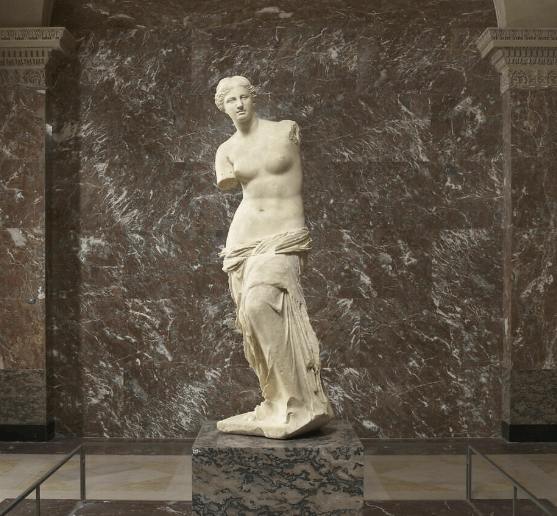
Let’s start with the figure that literally embodies beauty and perfection: Aphrodite, the Greek goddess of love and beauty.
In Ancient Greece, beauty standards were a way of showing your station in life. Fairer skin was prized over a good tan because it showed you were wealthy enough to sit inside all day – low class citizens like workers and slaves spent their days working in the sun, giving them tanned skin that instantly gave away their status as lower-class citizens.
Greeks also used weight as a way of showing class standing. Wealthier patrons could afford to eat as much as they wanted and didn’t have to participate in physical labor like working class citizens. Women of the time were considered more attractive if they had fat on them, including belly rolls, rounded hips, and a full figure. This is why most portrayals of Aphrodite created by the Ancient Greeks show her with rolls and curves, indicating her position as a goddess, the highest position possible.
Middle Ages
Welcome to the Middle Ages, where bathing is out and foreheads are in!
The Middle Ages were a time of great religious upheaval, and the beauty standards for women followed that and changed greatly from the time of the Greeks.
While bathing may not have been as popular during this era – it was believed public baths caused the spread of illnesses and most families didn’t have the resources or time to be running water to their houses every night for baths – hygiene was still important. Recipes have been recovered for herb mouthwashes and perfumes, and bone toothbrushes, hygiene kits, and nail cleaners were common in Middle-Age households.
The preferred female body shape was centered around child-bearing. There was less of a focus on a large chest and a curvy body, and more of a focus on large hips and a pronounced pelvis which would help keep a woman alive during a time when childbirth was extremely dangerous.
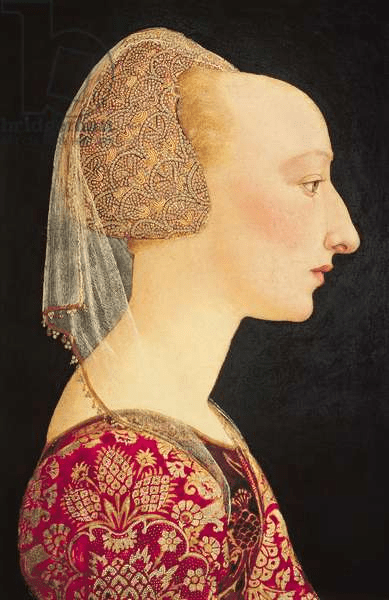
High foreheads were also popular, and many women would shave or pluck their hairline to push it as high as possible.
The Renaissance
The Renaissance was a return to seeing women not just as baby machines, but as objects of art and beauty. There was also a renewed belief in the Greek idea of ‘Kalokagathia’, the idea that a woman’s beauty acted as a window to her true self. Beauty (kallos) and goodness (agathos) were linked, meaning the more beautiful a woman was, the more “good” her soul was as well.
Pale skin was also still in, for the same reasons as before; the paler you were, the more time you spent indoors and the wealthier that meant you were. This increased desire to be as pale as possible led to the use of highly toxic chemicals being introduced into daily makeup routines. Venetian ceruse, made from white lead, created a thick layer of long-lasting white paste that could be applied to the skin. Side effects included severe skin damage, hair loss, and death from lead poisoning. Luckily, high foreheads were also still in, allowing you to kill two birds with one highly toxic but astonishingly white stone (too soon?).
The painters of the Renaissance also prized a full figure in their works. A soft stomach, rounded hips, and curved figure was a sign of wealth, prosperity, and health.

The Victorian Era
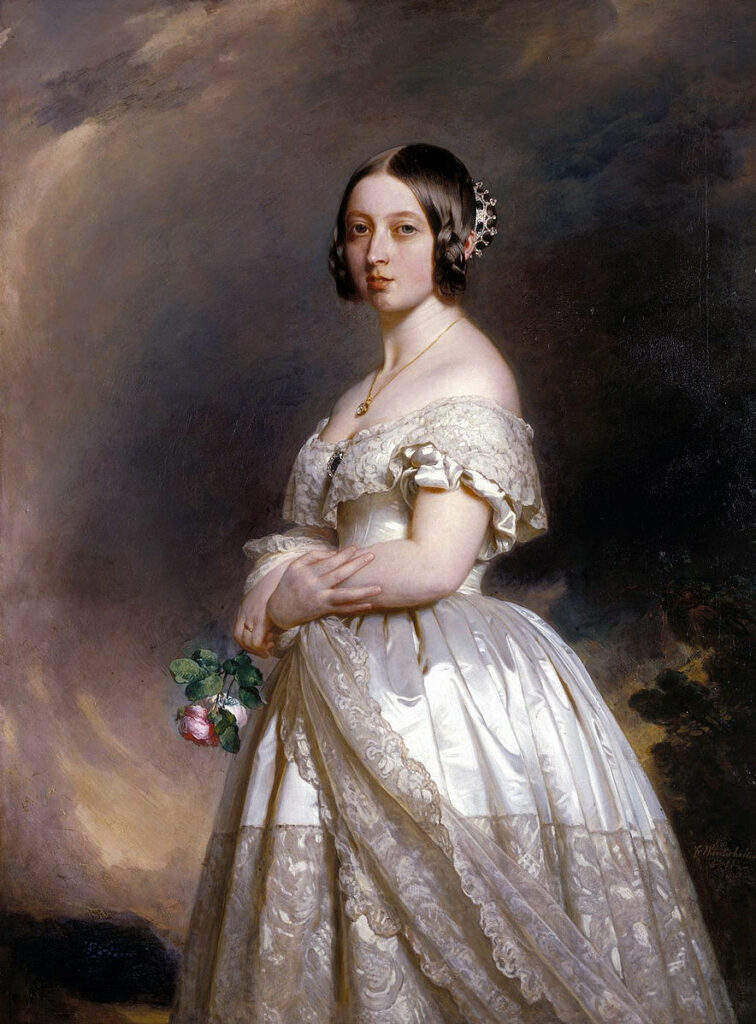
Jumping ahead to the Victorian Era, we see one of the first big changes in beauty standards. The era was named for Queen Victoria of England who despised makeup and believed it to be only suitable for prostitutes and actresses. This didn’t mean people stopped wearing makeup; they just got better at hiding it, turning to more natural looks that still emphasized youth and delicacy while suggesting that “why yes, I did just wake up like this”.
The theme of the era was fragility. The sicker you looked, the better. Women would draw faint blue lines on their arms and temples to give the impression you could see their veins. It was also common to emphasize dark shadows under the eyes to appear more fragile.
The hour-glass shape was also in style, with tiny waists symbolizing refinement and femininity. Corsets were tightly laced and women endured restricted breathing and the occasional fainting spell in their attempts to secure the perfect gentleman. And if you died from asphyxiation or the opium, ammonia, and mercury in your nightly face routine, well honey, a corpse was the hottest look of them all.
The Roaring 20’s
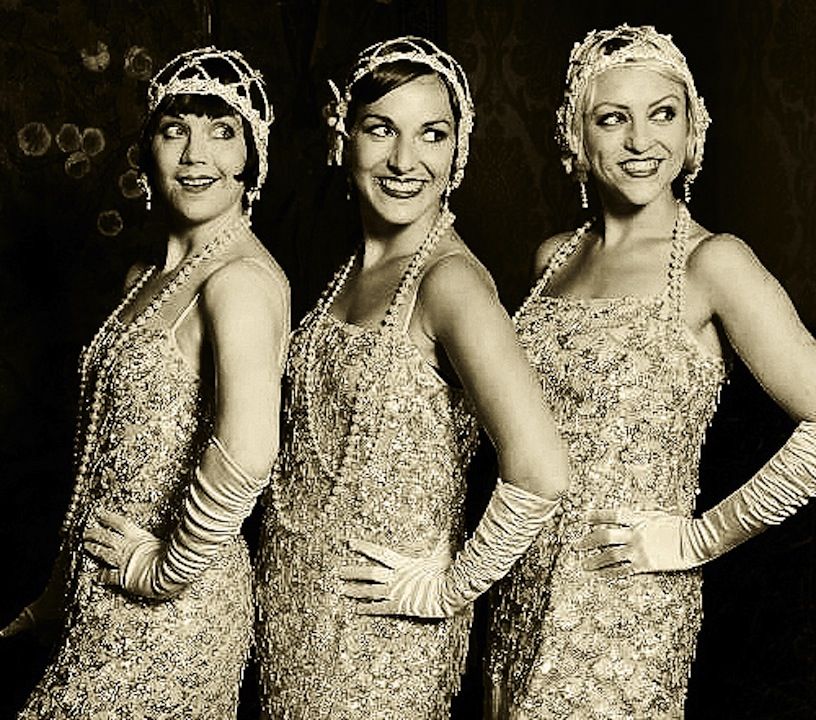
Say hello to the flappers and the Roaring 20’s, the era that would have made everyone that came before them faint from shock.
During World War I, women had finally gotten a taste of a working life. They’d replaced men in all kinds of jobs and when the men came back after the war, the women weren’t ready to give up their new-found freedom. The fashion standards began to shift toward a more masculine look; curves were out, starving yourself to look stick thin was in. Women also began to cut their hair short to match a more masculine style.
The rise of department stores also began creating a centralized place for beauty brands to take advantage of potential insecurities to make an extra buck.
Moving into World War 2 and the 30’s and 40’s, everyone was too focused on the Great Depression, food rations, and another war to focus on keeping a perfect figure. The stick figure trend of the 20’s was out, but rarely did anyone have enough food to be considered actually overweight.
The 50’s-60’s
Hello Marilyn Monroe!
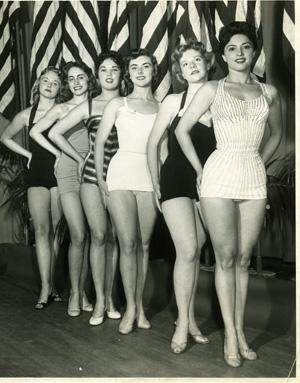
With the end of the war and the Great Depression, a curvy, hour-glass figure was back in style. The popularization of a large chest led to the invention of the push-up bra in 1947. The spread of easy access to television brought beauty pageants like Miss America to national attention and allowed for a faster and more widely accepted definition of the “perfect” body. A more scientific approach to beauty was adopted – beauty was now based on your measurements instead of your looks. It was all about mathematical precision instead of makeup, corset tightness, and under-eye shadows.
Bathing suit segments were some of the biggest parts of pageants, allowing women around the world to see on TV exactly how someone in a bathing suit should look.
The Late 60’s-90’s
Aaaaand we’re back to the stick-thin look. Did you know one of the most famous models from this time period was literally named Twiggy?
During the end of the 20th century, beauty examples shifted from actresses to models who tended to be much thinner than the average woman. Women at the time were expected to be tall (but not too tall), thin, athletic (but not bulky), with small hips, large breasts, and audible stomachs. Think Victorian era levels of fragility, only these women managed to accomplish it without the help of toxic chemicals.

The 2000’s – Present
Skinny culture continues in the 2000’s to the present, with the rise of social media only serving to continue to push these ideas onto younger and younger children. Middle schoolers know how to do a perfect smoky eye and are skipping lunch so they can have a flat belly.
Films like The Devil Wears Prada push skinny culture by continuously calling already stick-thin actresses like Anne Hathaway fat. Celebrities spend half their interviews talking about which diet they used to drop 20 pounds in a week.
Models have visible ribs and collarbones and those who criticize the health of these women are attacked for supposed body shaming. Weight loss medications like Ozempic are used by millions around the world to lose weight quickly without replacing it with muscle or learning how to keep off the weight without medical assistance.
Luckily, there has recently been a shift toward body positivity and celebrating bodies of all sizes and shapes. Celebrity athletes like Ilona Maher are taking to social media to show people “healthy” doesn’t mean stick thin. In 2024, Victoria’s Secret Fashion Show had models representing a myriad of body shapes, sizes, and abilities, a first for the company.

So what is the answer to the question “what is the “perfect” body”? I’m sure most of you think I’m going to say something like “all of them are perfect”.
However, you’d be wrong.
There is no such thing as a perfect body. (I’ll give you a second to gasp dramatically.)
The “perfect” body doesn’t exist. Perfection isn’t something that is possible with something that changes as much as our bodies. Sometimes you’ll have a bad hair day. Sometimes you’ll get a stomachache or a headache or just feel crappy. Some of us have a belly pouch, some of us have visible abs. Some of us have wrinkles, a weak chin, a pointy nose, lopsided breasts, I could go on and on and on.
So instead of getting up every day and hating your body because it’s not society’s current idea of “perfect”, show it some love because it’s carried you this far. Go on a beach trip with your friends and wear the bathing suit that’s cute, not the one that covers up your stretch marks.
And if you’re really having a hard time, remember if you’d been in Ancient Greece, you probably would have been worshiped as a goddess because you are so gorgeous.