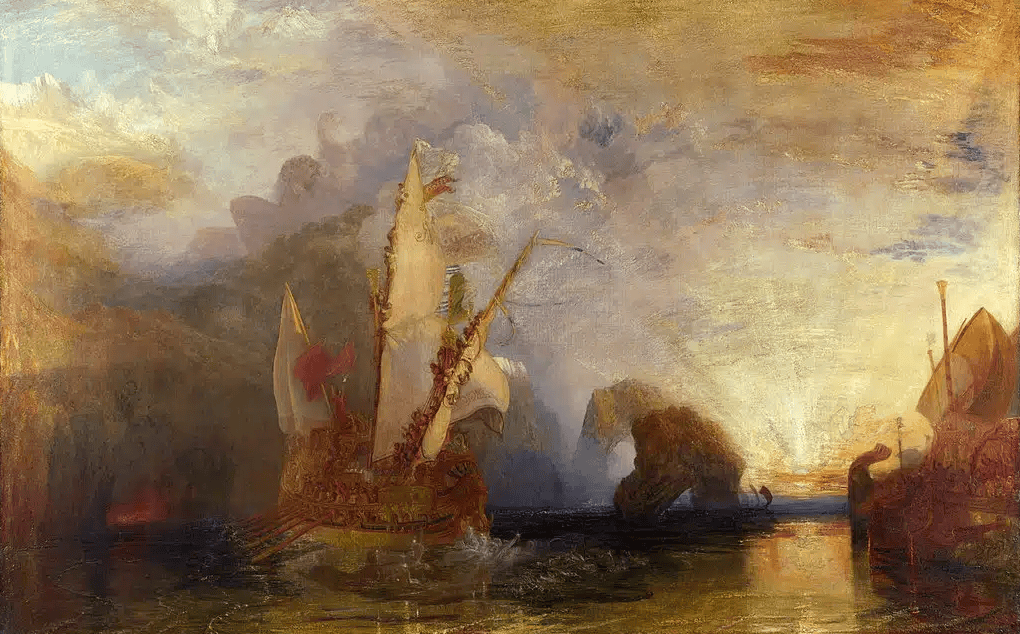
‘The Odyssey’ is one of the most well-known stories from pre-Biblical times and has been the inspiration for numerous adaptations and interpretations over the centuries. In the past year, two notable interpretations of the epic poem have gone viral for their retelling of the story. ‘The Odyssey’, a film written, directed and produced by Christopher Nolan and ‘Epic: The Musical’, written and produced by Jorge Rivera-Herrans.
Both adaptations have been popular and gained huge fanbases. However, those fanbases aren’t necessarily made up of the same people, and there are fans of the original story who disapprove of one or both new versions.
So how can two different versions of the same story have two very distinct fanbases? And what about each retelling makes that specific version unique to the countless others that have been made throughout the centuries?
(Disclaimer: For the most part, this article will be a comparison between the two sources mentioned above. However, any references from the original poem will come from the Emily Wilson translation.)
Timeline
Unbeknownst to most, the original epic poem doesn’t start with Odysseus. In fact, out of its 24 “books”, Odysseus doesn’t appear as a character until book five. The first four books of ‘The Odyssey’, often called ‘The Telemachy’, are about Odysseus’s family left behind in Ithaca. His wife Penelope and his son Telemachus struggle to keep control of their kingdom as their palace is overrun by suitors seeking Penelope’s hand in marriage and the throne.
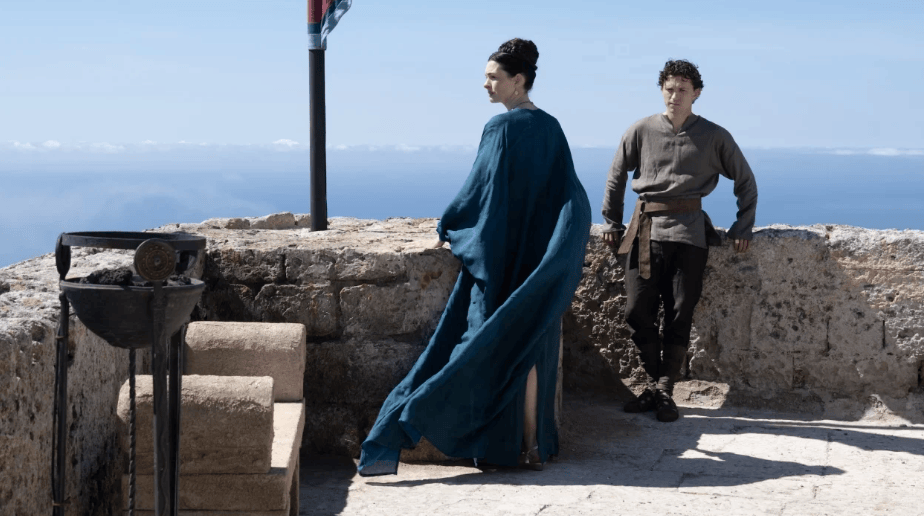
In this aspect of the story, Nolan’s film ‘The Odyssey’ is the most accurate to the original text. The film’s opening scene is of the suitors listening to a bard played by rapper Travis Scott telling the story of Odysseus at Troy. We see Telemachus watching the proceedings while Penelope weaves behind closed doors, also listening in. We also see Telemachus arguing with the suitors and their leader Antinous, before later speaking with Eumaeus, a swineherd and a close friend of Odysseus as Telemachus tries to get to know the father he never met.
Only when Telemachus starts asking questions about what could have happened to his father do we finally see Odysseus for the first time, trapped on the island of Ogygia with the goddess Calypso and eating lotus flowers to forget his past. The audience learns his story as Calypso forces him to stop eating the lotus and remember his crew and family. The majority of the film is cut between scenes of Odysseus’s journey as he begins to remember and Telemachus’s search for news of his missing father while defending himself and his mother from the suitors.
The film ends with Odysseus’s disguised return to Ithaca where he meets with Telemachus and Penelope, although neither know who he is at first. After Penelope issues her challenge, Odysseus reveals himself and kills the suitors. He and Penelope pass the throne to Telemachus before accepting exile and sailing into the unknown west together.
‘Epic: The Musical’ by Jorge Rivera-Herrans follows a different order completely, using a chronological style to tell Odysseus’s story. The musical is split into 9 ‘sagas’, almost like mini albums, that each tell a different part of Odysseus’s adventures. Although they are named and repeatedly shown as being a major influence on Odysseus’s determination to return home, Telemachus and Penelope aren’t introduced as characters until the 8th Saga, ‘The Wisdom Saga’.
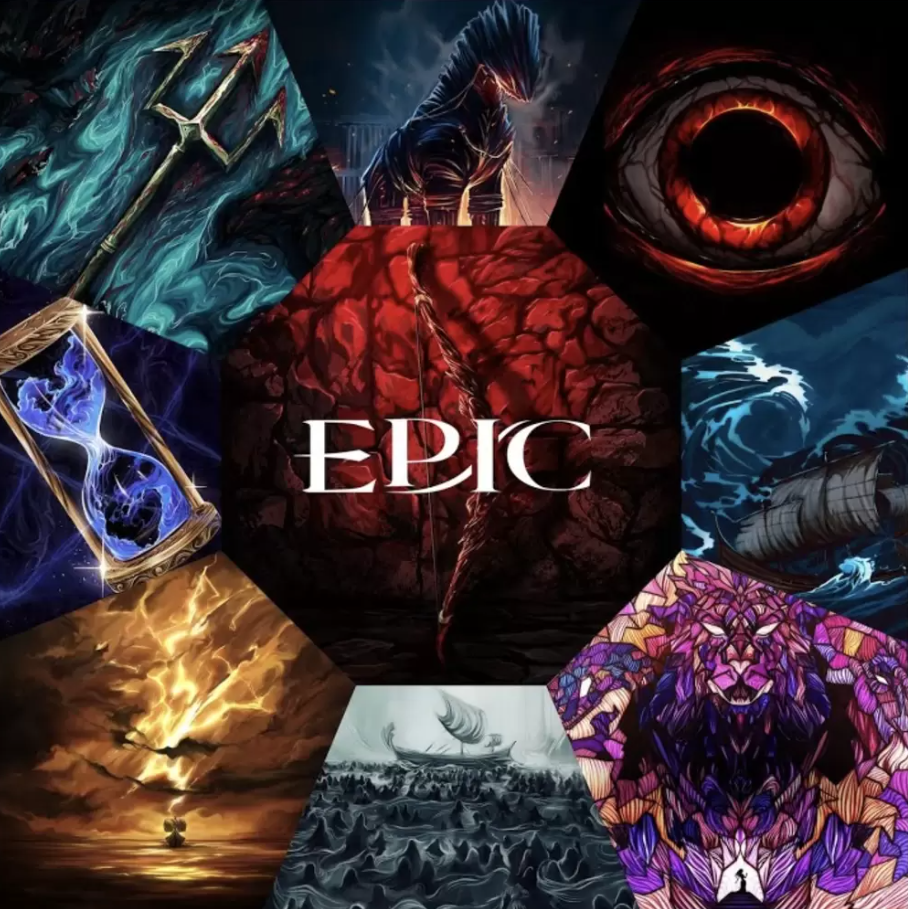
The musical also skips over much of Telemachus’s journey to find Odysseus. In the original epic and Nolan’s film, we see Telemachus sail to meet with Menelaus, one of the commanding generals Odysseus fought alongside during the Trojan War to ask if he knows anything about the whereabouts of Odysseus. In ‘Epic’, Telemachus’s story is solely focused on his desire to be like the father he’s never known and protect Ithaca and his mother from the suitors ravaging his house.
The Olympian Gods
A main theme of ‘The Odyssey’ is the consequences of upsetting or defying the gods. Odysseus’s hubris with the cyclops Polyphemus at the very beginning of his journey angers the sea god Poseidon, dooming the voyagers and setting the tone for their journey home. However, Nolan and Rivera-Herrans take vastly different approaches in how they represent the Olympian gods and their emotions and the roles they plan in Odysseus’s journey.
In Nolan’s film, the only Olympian we actually see on screen is Athena, goddess of wisdom and warfare. She barely has any lines, instead appearing as a vision to only Odysseus in times of unsurety to act as a guiding figure.
The rest of the gods Nolan chooses to represent through nature. Zeus is represented in moments of booming thunder and when Odysseus and his men injure the cyclops Polyphemus, son of Poseidon, the sea god’s anger is shown through the numerous deadly storms the crew faces.
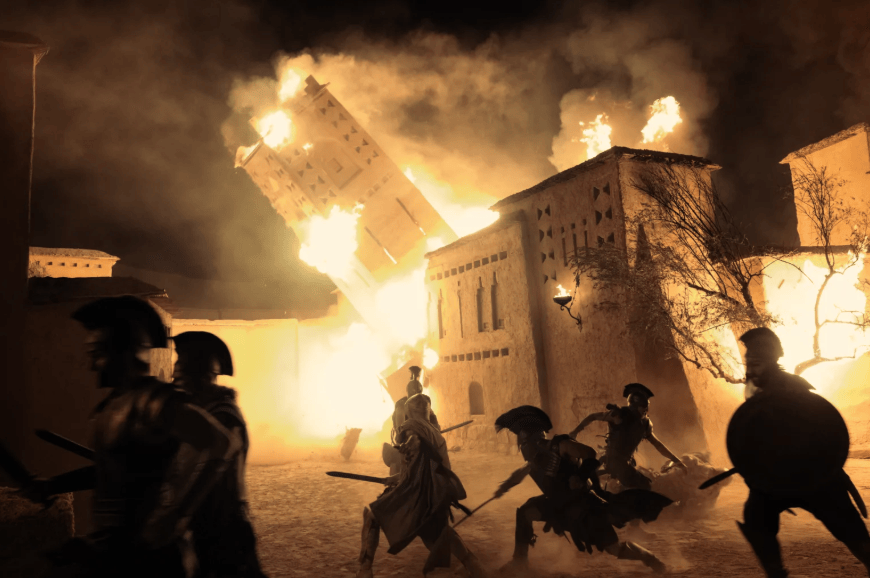
Instead of using mysterious visions and ominous thunder to show the will of the gods, Rivera-Herrans gives them their own musical numbers. When Odysseus blinds Polyphemus, Poseidon sings a song titled “Ruthlessness” where he tells Odysseus he will make him and his crew pay for Odysseus’s mercy and hubris with their lives, establishing Poseidon as one of the major “villains” of the musical.
Athena also has a number of pop pieces where she explains how she and Odysseus first met, why she abandons him after the cyclop’s cave and how she comes to befriend and become a mentor to Telemachus.
Hermes also appears in Rivera-Herrans’s interpretation in two techno-pop songs where he in a way takes over for Athena as a guide for Odysseus.
The difference with the biggest effect on the story is Zeus’s punishment of Odysseus and his crew after the slaughter of the sun god’s cattle. In Nolan’s film, Odysseus has already been told by the prophet Tiresias his crew will all die after feasting on the cattle. When the event eventually comes to pass, Odysseus is almost apathetic as they row away from the island in an attempt to outrun Zeus’s wrath. A massive storm overtakes the ship and splits it in half, carrying Odysseus to the island of Calypso as his crew presumably drowns in the roiling waters.
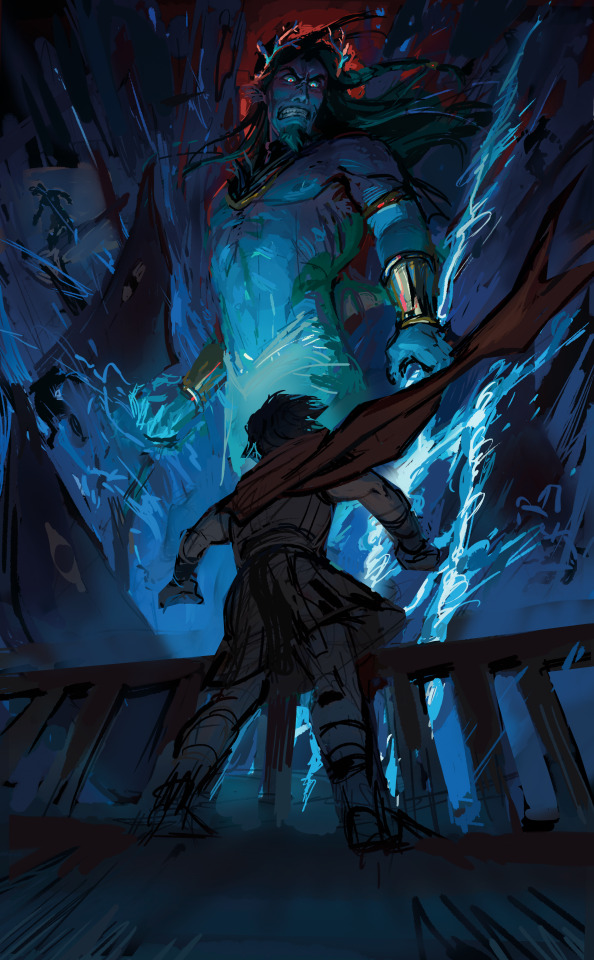
In ‘Epic: the Musical’, Odysseus doesn’t know his crew is fated to die. Instead when they slaughter the cattle, he tells them all to run in the chance that they might escape Zeus’s wrath. When the storm overtakes them, Zeus gives Odysseus a choice: either Odysseus can die and his crew will survive, or his crew will die and Odysseus will survive. While his crew begs Odysseus to choose their lives over his, we see Odysseus face one of the biggest internal struggles of the entire story. In the end, he sacrifices his crew so he might live to return home to his family. However, for the rest of the musical we continue to hear the echoes of his crew in the background of songs as their memories and his choice relentlessly haunts him.
Monsters and Minor Gods
For the most part, Nolan and Rivera-Herrans don’t differ too much in their interpretations of the monsters and minor gods Odysseus encounters on his journey home.
Both stories include segments in the cyclops Polyphemus’s cave, a major event that destroys most of Odysseus’s fleet – for Nolan, this is the Laestrygonian giants, for Rivera-Herrans it’s Poseidon’s storm – Circe’s island, a visit to the Underworld and meeting the prophet Tiresias, sailing past the sirens, the slaughter of the sun god’s cattle, Calypso’s island, and the final storm before Odysseus’s return to Ithaca.
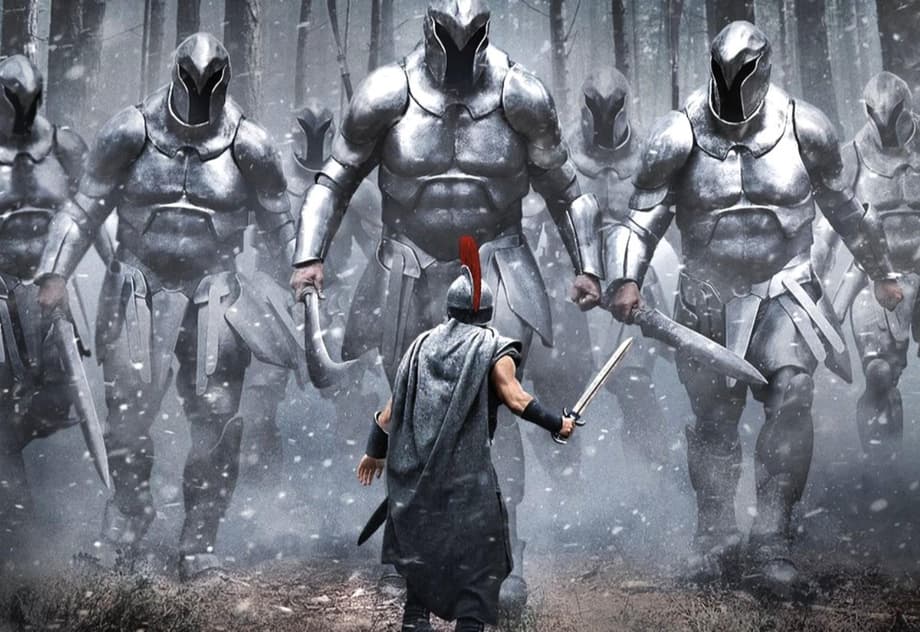
One difference that surprised many viewers of Nolan’s film was his choice to omit the ‘nobody’ pun, one of the most iconic scenes in ‘The Odyssey’. In the original epic when the cyclops Polyphemus asks Odysseus his name, Odysseus calls himself Nobody. Later, after Odysseus injures Polyphemus and the other cyclopes come to investigate the sound of his screaming, he tells them Nobody hurt him. The other cyclopes leave, falling for the trick and allowing Odysseus and his men to escape. In Nolan’s film, he leaves out the play-on-words and instead has Odysseus shoot Polyphemus with an arrow as they leave the island. This is then given as the reason Poseidon is angered and attacks Odysseus’s ships.
Rivera-Herrans’ version keeps the pun. In the musical, Odysseus’s big mistake is turning back after he’s tricked and injured Polyphemus to reveal his true identity. It’s shown as an act of hubris that results in Poseidon attacking the crew. The sea god makes it clear to Odysseus that his anger doesn’t come from the injury to Polyphemus – he even tells him “you totally could have avoided all this had you just killed my son”. Instead, his anger is based on the fact that Odysseus thought he could damage something of the sea gods and brag about it without thinking there would be consequences. Based on Poseidon’s song, it’s likely Odysseus and his crew would have had smooth sailing home if only Odysseus had injured Polyphemus and then immediately left without needing to lord his victory over the cyclops.
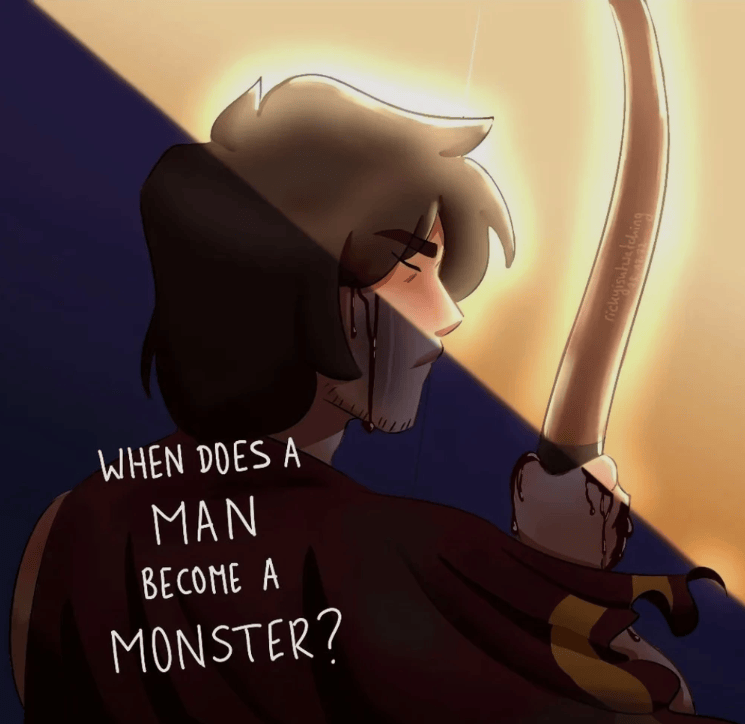
The other major difference between the interpretations is how the villains Odysseus faces are reflected in himself. While Nolan’s film shows an Odysseus who seems to have few regrets for his actions against the monsters that he and his men confront – the only thing we really see him show regret for is the ransacking of Troy and the destroying of Athena’s temple – Rivera-Herrans’ Odysseus is constantly racked with self-doubt comparing himself to the foes he’s faced. In the Act 1 finale, appropriately titled ‘Monster’, he asks himself
‘What if I’m the monster? What if I’m in the wrong?
What if I’m the problem that’s been hiding all along?
What if I’m the one that killed you every time I caved to guilt?
What if I’ve been far too kind to foes, but a monster to ourselves?
What if I’m the monster?’
This notion tears so much at him that by the end of the musical, he’s convinced himself he’s no longer a man that deserves to return to Ithaca and his family.
Odysseus’s Crew
Throughout his journey, Odysseus’ main goal is to return home to his family and kingdom. However, both adaptations add the death of one of his soldiers that weighs on him throughout his journey home.
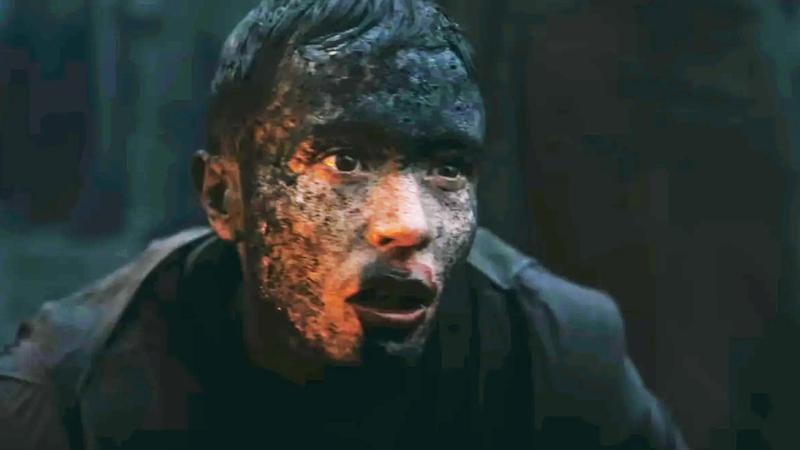
In Nolan’s film the soldier is Sinon, a young boy who has been tricked by the suitor Antinous into taking his place in the Trojan War. Sinon is left by the Greek army, namely Odysseus and the other generals to guard the wooden horse from the Trojans. Unbeknownst to Sinon, who believes the horse is a gift to the goddess Athena, the horse has been set as a trap for Troy. When Sinon is killed by Trojan soldiers, he has no idea the commander he’s been loyal to for over a decade is hiding just inches from him inside the horse and not raising a finger to save Sinon.
Odysseus later faces Sinon again in the Underworld where Sinon’s shade gives him the token Antinous had given Sinon when Sinon left for war. He charges Odysseus with returning the token to Antinous and Odysseus carries it with him for the rest of his voyage. When he returns to Ithaca and the suitors ask who he is, believing him to be a homeless beggar, he gives the name Sinon and Antinous immediately becomes hostile toward him. Later, when Odysseus kills Antinous by stabbing him through the heart, he shoves the token in Antinous’s mouth, repaying his debt to Sinon.
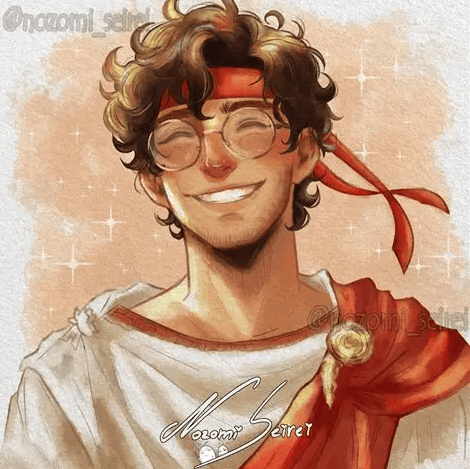
In ‘Epic: the Musical’, Sinon isn’t a character. Instead, in the very first saga we meet Polites, a trusted friend of Odysseus. In his song ‘Open Arms’, he encourages Odysseus to relearn to love and trust the world around him and relax from the war. He encourages Odysseus to trust the lotus eaters who in turn lead Odysseus and his crew to Polyphemus’s cave, resulting in Polites’s death. Throughout the rest of the musical, Polities’s voice is often heard in the background of songs, reminding his friend to ‘greet the world with open arms’. However, in most instances where his voice is heard, it only acts as another reminder to Odysseus of all the mistakes he’s made and everyone he’s lost trying to get back to Ithaca.
Penelope and Odysseus’s Homecoming
One of the things almost all new adaptations of ‘The Odyssey’ seem to have is a renowned interest in the character of Penelope, wife of Odysseus and Queen of Ithaca. In the original epic, Penelope’s resistance against the suitors is quiet and hidden. After being forced to agree to marry one of the suitors once she’s finished weaving her father-in-law’s burial shroud, she spends each night unweaving the progress she’s made during the day, quietly resisting the suitors and postponing her eventual remarriage.
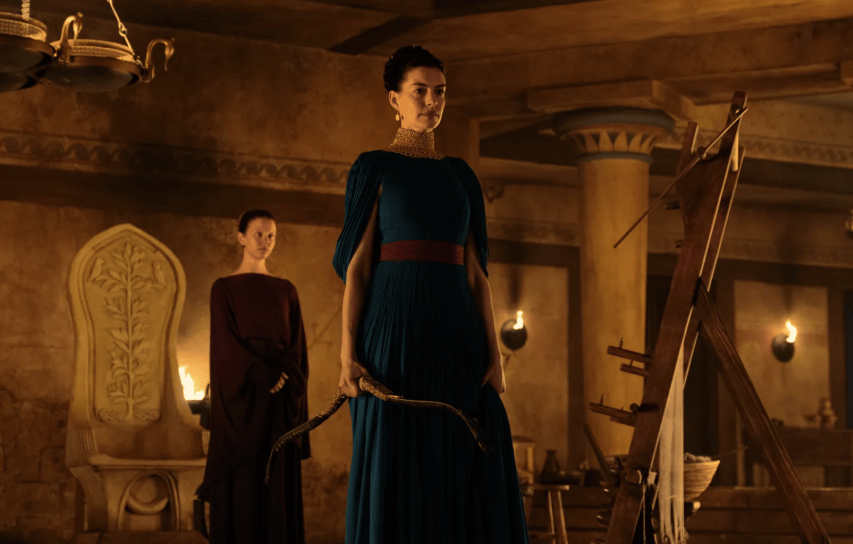
In Nolan’s film we see Penelope strive for recognition as more than a mother and a wife. She demands to be seen as the Queen of Ithaca after she’s ruled the country in her husband’s absence for 20 years. When Telemachus tells her he intends to claim the throne because it’s sat empty for too long, she reminds him she has been the one sitting on it. Her unwillingness to remarry comes as much from a refusal to accept her husband’s death as it is a determination to continue ruling the country herself.
Rivera-Herrans’s Penelope doesn’t have as much “screen time” as Nolan’s. However,we still get a sense of her determination to hold out until Odysseus returns in her song ‘The Challenge’. In the first few lines of the song she says
“I’m supposed to choose a suitor to wear the crown.
I said I would choose as soon as I weave this shroud.
They don’t know that every night I unthread all the work I’ve done,
‘Cause I’d rather lie than allow them to think they’ve won.”
Penelope’s character in ‘Epic: the Musical’ is much more centered around her longing for her husband’s return. However, we do also get to see an element of her wit in the musical’s final song, ‘Would You Fall in Love with Me Again?’
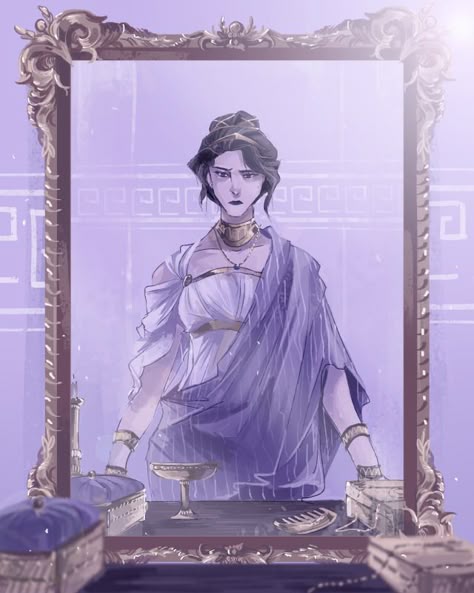
Odysseus has returned to Ithaca, killed the suitors and been reunited with Penelope but he is so haunted by everything he’s done to get home he tells her he’s no longer the man she originally fell in love with and asks if there’s any way she might be able to fall in love with him again. Instead of trying to comfort him or assuage his doubts, Penelope gives him a challenge only Odysseus would pass. She tells him to move their marriage bed which Odysseus had built around an olive tree, making it unmoveable. When Odysseus responds that he’d have to cut down the tree that represents their love, she tells him
“Only my husband knew that,
So I guess that makes him you.
I will fall in love with you over and over again,
I don’t care how, where, or when,
No matter how long it’s been, you’re mine.”
After Odysseus has spent the entire story feeling as though he’s turned into a monster who no longer deserves the love of his family, the final moment of the musical is spent reminding him that love isn’t based on consistency, but on loyalty and strength in the face of change.
Major Themes and the Ending
The original epic, Nolan’s film and Rivera-Herrans’s musical all have vastly different endings, all based on what the creator believed the true theme of the story was.
For Nolan, some of the biggest themes of ‘The Odyssey’ were destiny and fate and honoring the sacrifice of others. At the end of the film, instead of retaking his throne like we assume he will, he chooses voluntary exile, reasoning that by killing the suitors and violating Zeus’s law, he’s no longer fit to rule. His throne passes to his son Telemachus and Odysseus and Penelope sail into the unknown west to honor Odysseus’s fallen soldiers.
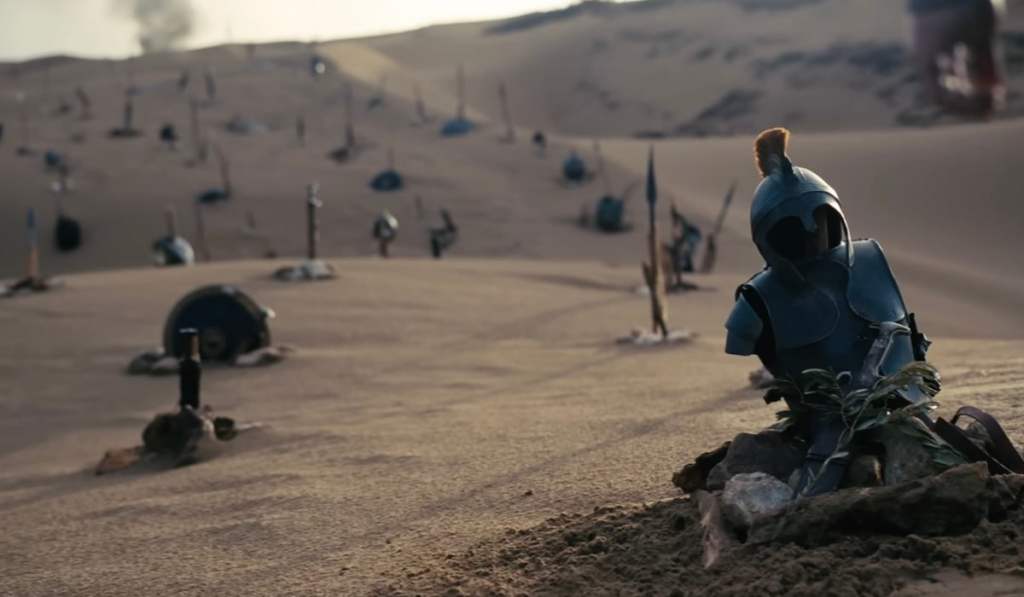
While Nolan’s Odysseus does his best to only kill the suitors that are a danger to his home – Antinous and others who fight back instead of submitting when he reveals his return – Rivera-Herrans’s Odysseus has spent the entire musical being shown the consequences of his mercy. When he gets back to Ithaca, he quickly and brutally slaughters the suitors as they beg for his mercy, telling them
‘My mercy has long since drowned.
It died to bring me home.
And as long as you’re around
My family’s fate is left unknown.
You plotted to kill my son,
You planned to rape my wife.
All of you are going to die.”
The slaughter of the suitors is the final nail in the coffin of Odysseus’s humanity. His mercy which he took so much pride in at the beginning of the story has gotten all of his men killed, so he no longer believes in it.
After he kills the suitors, he finds Penelope and begs for her forgiveness. Their reunification is the end of the musical. What happens past that is no longer relevant to the theme of mercy versus ruthlessness that has guided the rest of the story. Odysseus has spent the entire musical fighting to show mercy to his foes, and the story ends when Penelope shows him how to show mercy to himself.
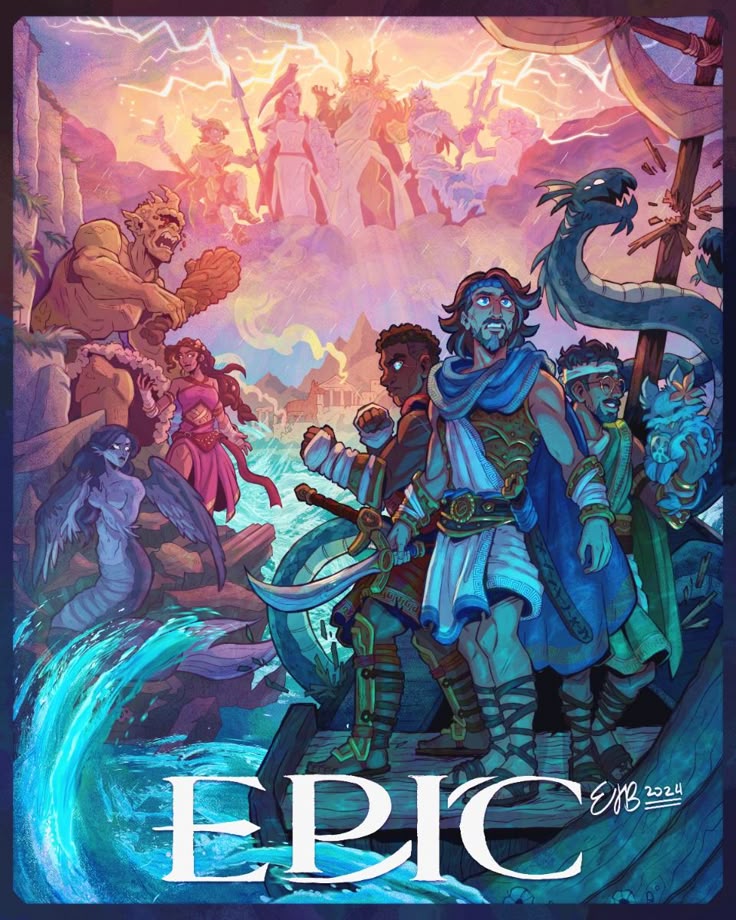
So why is the Odyssey so popular with so many different people? Just between these two versions we can see how different they are. Outside of them, there are probably thousands to millions of adaptations, interpretations and retellings of the age-old story. So what about the Odyssey inspires people time and time again to tell it their own way?
I would argue it’s because it’s a story everyone can relate to. Although the word ‘Odyssey’ comes from the name Odysseus, the story’s main character, it’s since become a word used to describe a long, harrowing journey, something we’ve all experienced in some form or another. The feeling of doing everything you can just to get home to those you love is something most, if not all people can relate to. From refugees and immigrants trying to find a safe place to live to someone who has been blocked from seeing their loved ones due to financial, political, physical, or other reasons, to someone who has had the worst day of their life and just wants to get home and sit beside their loved one and have someone tell them it’ll be ok.
Epics are often huge tales of legendary warriors and heroic, world-changing battles. They’re cool to read or watch in a movie but they’re not often very relatable. The Odyssey changes that stereotype and creates a main character who we can see ourselves in, which is why it has inspired and will continue inspiring storytellers in the years to come.
‘The Odyssey’ by Christopher Nolan is in theaters now.
‘Epic: the Musical’ by Jorge Rivera-Herrans is available anywhere music is streamed.

