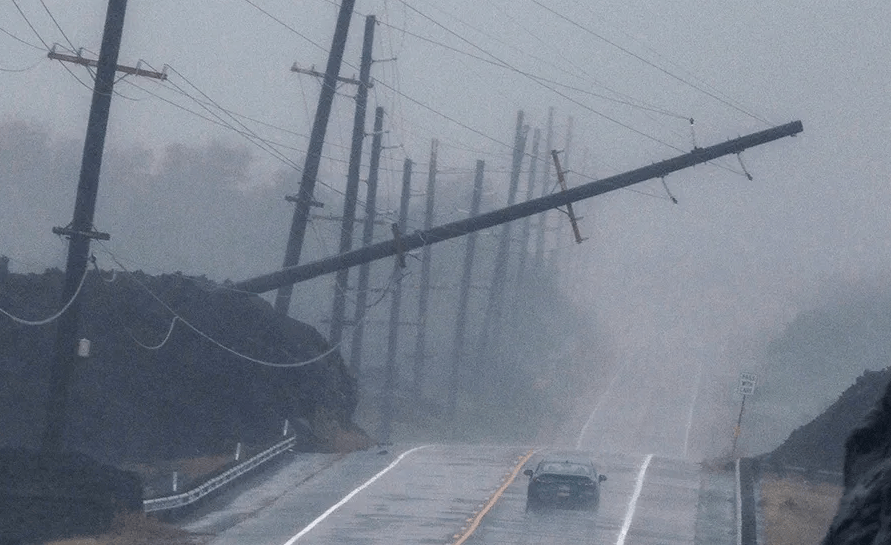
A downed utility pole hangs over Mamalahoa Highway near Ocean View, Hawaii, as Hurricane Lala lashes the Big Island on Aug. 15.
What began as a tropical storm in the Pacific Ocean east-southeast of Hawaii officially brushed the state on August 15 as a Category 1 hurricane. Hurricane Lala never actually made landfall on Hawaii’s Big Island – if it had, it would have been the first hurricane to do so since 1871. However, even though it only brushed the island, the storm still did considerable damage to the homes and communities living there.
The Big Island’s northern coast reportedly received the heaviest storms and flooding, with Laupahoehoe in the District of North Hilo getting 43.54 inches of rain between August 14-16. On the southeastern side of the island, districts received over 35 inches of rain. On August 15, the downpour reportedly reached up to five inches an hour at some points. Flooding closed roads and flash flood emergency warnings were issued in the Naalehu District and Honolulu Country, among others.
Lala even brought snow to the summit of Maunakea where winds reached 140mph and temperatures dropped into the 20s.
After passing the Big Island, Lala continued westward through the Pacific Ocean, brushing Maui, Honolulu and Kauai as a weaker storm before heading back into the open ocean.
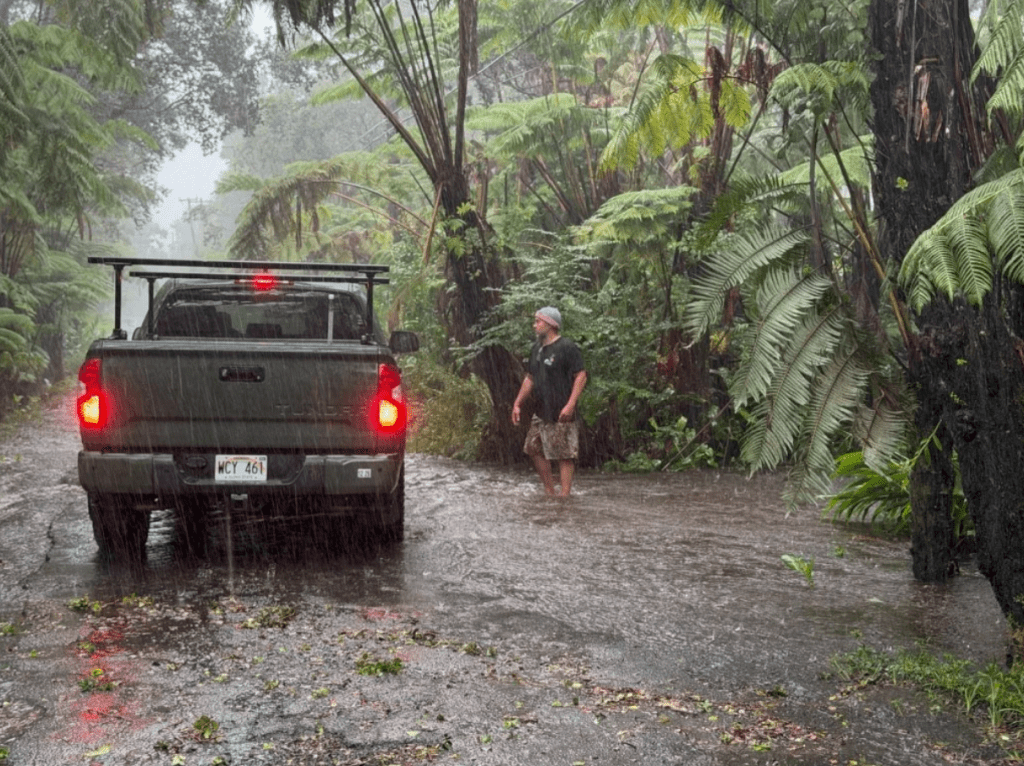
Since the storm, over 200,000 residents of the Big Island have been left without power. In the Naalehu District, two homes were swept off their foundations and 19 other buildings reportedly lost their roofs. Other residences and buildings across the entire island have been left severely damaged and several uninhabitable. Residents are facing power outages, road and bridge closures and an inability to access basic needs like water, food and shelter.
As of Sunday August 16, only one storm-related fatality has been confirmed. A casket was also found unearthed in the Kau district. Authorities are currently working to identify it and return it to its original burial site.
Although Lala is one of only a few storms of its size to come near Hawaii, it also is unlikely to be the last. Forecasters suggest the current El Niño pattern in the Pacific contributed to the storm’s size and strength. In recent years, climate change has caused the Pacific to warm faster and to higher temperatures than normal, leading to stronger El Niño events and likely bigger and deadlier storms in the Pacific in coming years.
As of Tuesday August 18, there has been no word of aid being sent from Washington, D.C. to Hawaii’s affected islands.
For those in Hawaii, Aloha United Way is helping connect people with resources for safety, recovery and support.
Call 211 or 808-275-2000
Text 877-275-6569
For those outside Hawaii, donations to World Central Kitchen, Salvation Army Hawaii and the Lāhui Foundation can go a long way to helping those struggling to find shelter, clean food and water, and other resources.
www.civilbeat.org has an extensive list of organizations taking donations to help Lala victims.

