A Rabbi, a priest and a nun walk into a polling center…
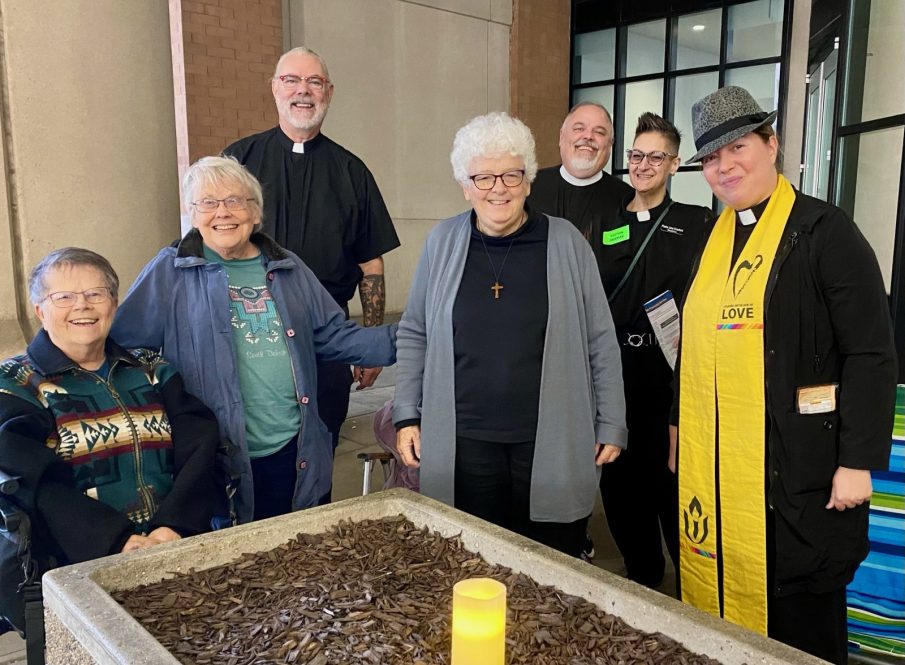
With the November midterm elections coming up in just a couple weeks, it feels like every way you turn someone is asking what your plans to vote are. While there are thousands of groups that work nonstop in the months leading up to the election to encourage and educate voters across the U.S., it’s much rarer to see any of these groups at polling places on the actual day of the election.
While that’s not to criticize or minimize the impact these groups have on elections, for many voters the reason they aren’t voting has nothing to do with being unaware of an upcoming election or not knowing who’s on the ballot. Instead, barriers such as not being able to get time off from work, not having proper identification, long lines, fear of protests or intimidation at polling locations and more can be some of the biggest barriers prospective voters face on election day.
Faiths United to Save Democracy has set out to change that. FUSD was founded in 2021 by the Turnout Sunday group following the public murder of George Floyd. FUSD’s goal, according to their website, is “neutralizing mounting efforts that make it more difficult for people living in poverty, vulnerable voters, including targeting voters of color, the elderly, students, and the disabled, to exercise their right to vote in free, fair, and safe elections. The campaign is built on the strength of the Black Church’s long history and experience in voting rights protections, with a broader effort to protect the voting rights of all voters in FUSD priority states at polling sites serving vulnerable voters.”
FUSD is made up of members and leaders from the Jewish, Muslim, Hispanic evangelicals, Black Church, Asian and Mainline White Church communities to reflect a “nonpartisan, interfaith, multi-racial, and intergenerational effort to overcome the unprecedented assault on democracy with the dramatic increase in voter restriction laws,” the FUSD website reads.
On election days, poll chaplains with FUSD visit or spend the day at polling sites in battleground states; for the Nov. 2026 election, they will be in Arizona, Michigan, Georgia, Ohio, Pennsylvania, North Carolina, Wisconsin, Virginia and Texas.
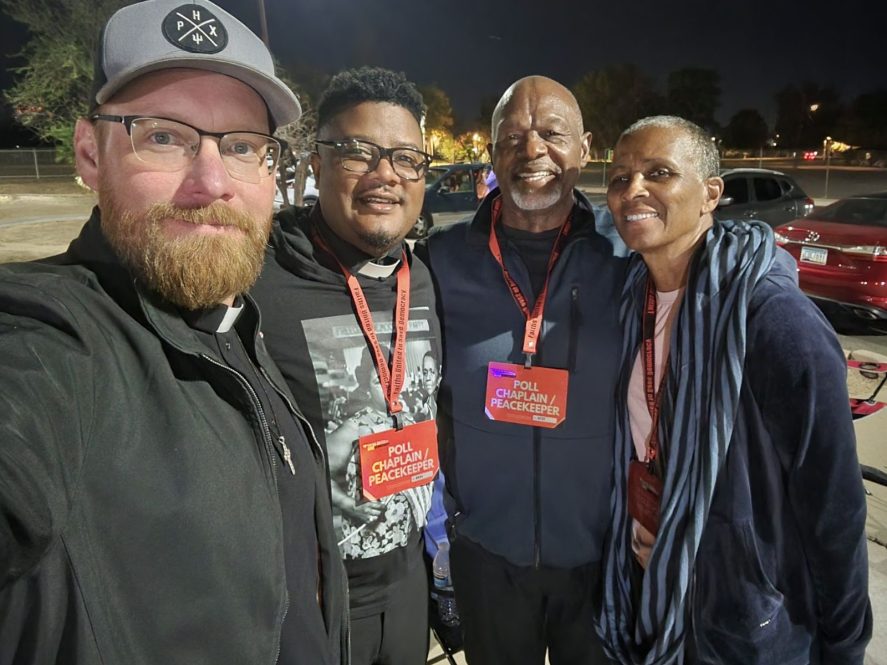
Their job is to provide a calming and peaceful presence so voters can exercise their rights without fear. Poll chaplains are also trained in de-escalation techniques, immigrant rights and are given contract information and phone numbers to call when help is needed.
“One thing that really struck me was how long the lines were and how unprepared everyone was for long waits,” Nomi Joyrich, Michigan director for Jews for a Secular Democracy said, referencing the days she spent assisting with early voting in the metro-Detroit area during the 2024 election season. “Several of us took this concern back to the voting rights coalition we are part of, and they actually found last-minute funding to provide line support. This allowed several organizations to send people to do things like bring chairs for people to sit in while they stood in line. We were also able to talk to the precinct chairs and help check the line and usher in people who were unable to stand.”
“Poll chaplaincy is a way for me to reach back and shake the hands of elders and ancestors who worked for my right to vote,” Rev. Dr. Dontá McGilvery, state lead for FUSD, said after serving in Phoenix, Ariz. during the 2024 election season. “As an African American male, I think about how religious leaders and faith communities marched on Bloody Sunday to expand that right. A vote is precious because I get to use my voice and research to vote for the leader I think will make moral, just, logical decisions and care for the least of these.”
Poll chaplains aren’t just there to protect voters from outside harm. They also serve as an encouraging voice and a warm presence for people who may need some extra support, who might be voting for the first time, may have disabilities that make standing in line or accessing the polling center difficult, and more.
In a previous election, Rev. Steve Bland successfully calmed down a confrontation with a crowd of protestors who were trying to intimidate voters, including an elderly Black woman who, after voting herself, came back with two of her grandsons.
“Without that intervention, three people wouldn’t have voted that day,” Bland said following the incident.
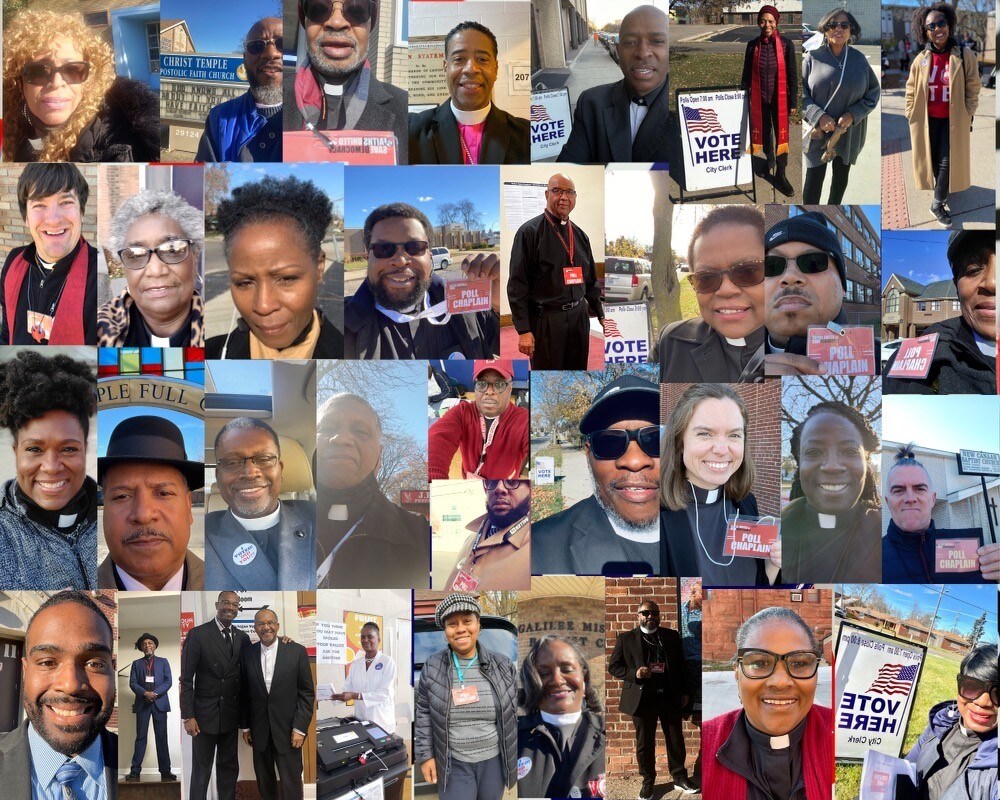
With fear around polling centers becoming stops for ICE raids and immigration agents during the 2026 election, poll chaplains have become more important than ever. As of Oct. 19, FUSD reported they’d recruited 1,235 poll chaplains and peacekeepers to send to the nine battleground states.
“This is a movement built by unusual coalitions,” Barbara Williams-Skinner, FUSD co-founder said. “You have white, Mainline Protestants, Quakers, traditional Baptists, Black church leaders, imams, rabbis – all kinds of people who probably would not work together or haven’t worked together in the past.”
“We don’t get hung up on who’s moderate or who’s conservative,” Williams-Skinner added. “People just need to be able to vote, unafraid.”

