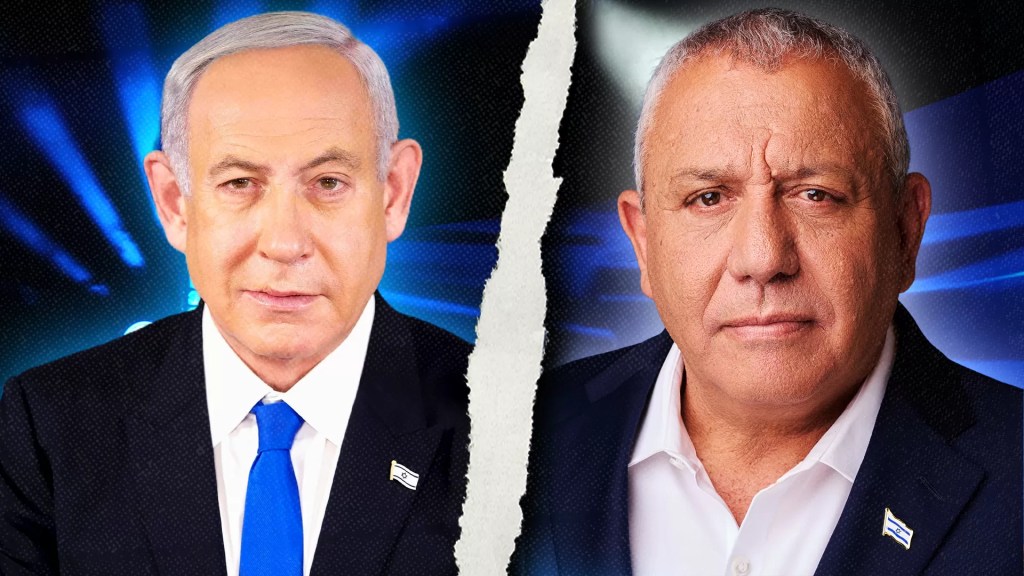
(ahav Studio/Avi Ohayon / Government Press Office of Israel/Gil Cohen-Magen/dpa/picture-alliance/Newscom/Les Cunliffe/Dreamstime)
As ballots are counted following the Israeli election for Prime Minister Oct. 27, incumbent Benjamin Netanyahu and rival Gadi Eisenkot are running neck and neck with no clear winner or majority announced.
This is the first election for Prime Minister Israel has had since the Oct. 7, 2023 Hamas attacks terrorized the country. Netanyahu responded to the attacks by declaring war on Hamas and the Palestinian territories. Now, three years later many Israelis, both Jewish and Arab, are dissatisfied with how Netanyahu has carried out the war.
In the recent election, 78% of eligible voters cast a ballot, including over 70,000 Israelis living abroad who traveled back to Israel just to vote. The election had the highest reported voter turnout since 1999.
Netanyahu is currently the longest-serving prime minister in Israel’s history, with three non-consecutive terms adding up to over 18 years in office.
So who is Gadi Eisenkot, and how has he come to successfully challenge one of the most beloved and controversial leaders in Israel’s history?
Born in 1960 to Moroccan Jewish immigrant parents, Eisenkot grew up in Eilat in southern Israel. He enlisted in the Israeli army straight out of grade school at 18 years old, quickly rising through the ranks and spending four decades moving between senior command positions before retiring in 2019.
In the early 2000s, Eisenkot served as the military Operations Director and Northern Command.
Eisenkot also helped lead the “Dahieh Doctrine”, advocating for the use of overwhelming military force against any civilian area where attacks against Israel were launched. Eisenkot reasoned anywhere launching military attacks should be treated as a military base, regardless of the civilian population,
After serving as deputy to the chief of staff during the 2014 war on Gaza, Netanyahu appointed Eisenkot chief of staff. Under Eisenkot, over 200 Palestinians were killed during the 2018-19 Great March of Return protests along the Gaza-Israel border.
In 2022, Eisenkot started his career in politics after joining the center-right National Unity party and being elected to Knesset, the Israeli parliament later that year. Following the Oct. 7 attacks, Eisenkot joined Israel’s war cabinet until, less than a year later, disagreements between Eisenkot and Netanyahu concerning Netanyahu’s handling of the rescue of Israeli hostages from Hamas led to Eisenkot’s resignation.
By that point Eisenkot’s own son, as well as two of his nephews had been killed in action in Gaza.
Eisenkot accused Netanyahu of ignoring pre-attack intelligence reports and failing to prioritize the rescue of hostages.
“Forty-six hostages who should have returned did not return, some of whom we could have brought back,” he told Channel 12 News in January 2026. He also accused Netanyahu of “sabotaging” an agreement with Hamas early on in the war for his own personal political gain.
Following his departure from the Israeli war cabinet, Eisenkot founded his own political party Yashar, meaning “straight” and “honest” in Hebrew. Eisenkot said the party would work toward “repair, healing, and hope for Israeli society”, while placing the “security and national interests of the State of Israel above every other consideration.”
Now, between Yashad’s political messages and an overall distrust and dislike of Netanyahu’s government among Israelis, Eisenkot, once one of Netanyahu’s most trusted officials, has now become his biggest rival.
In order to win the election, candidates must win a minimum of 61 seats. As of Oct. 30, Netanyahu held 53 and Eisenkot 48. 19 seats went to various Arab parties representing Israel’s Palestinian population.
Protestors gathered outside Eisenkot’s Herzliya residence Oct. 29 pushing him to include the Arab parties in his new government to win the election.
“There is no change without partnership,” the protestors chanted.
The 19 Arab seats will likely become the tie-breaker in the election unless another agreement is worked out.

