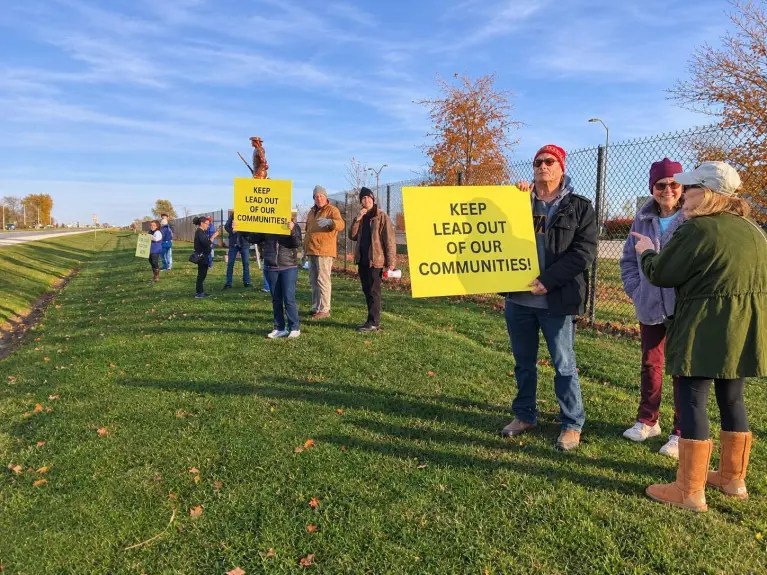
In a statement Nov. 23, the US Army announced they will proceed with a plan to remove 68 barrels of lead azide from an Iowa Army ammunition plant via detonation Nov. 25.
The detonation has been heavily controversial due to the likelihood of it releasing dangerous lead dust into surrounding towns and cities. Environmental groups including the Iowa Environment Council and the Sierra Club’s Iowa chapter have challenged the detonation’s approval, saying the Army skipped necessary steps in acquiring a permit. Other environmental agencies have cited the damage that could be done to communities, farms and livestock.
The urgency of the detonation is due to the safety threat posed by the barrels in their current condition.
“Department of Defense Explosive Ordnance Disposal (EOD) technical personnel inspected the drums and issued a formal safety directive to not move the material,” a Mitigated Finding of No Significant Impact for the Lead Azide Risk Mitigation at Iowa Army Ammunition Plant report signed by Lt. Col. Daniel V. Nosse on Nov. 18 read. “Movement, physical handling, or off-site transit over public transportation routes presents an unacceptable risk of accidental, catastrophic detonation. Leaving the stockpile in place without destruction presents an ongoing, escalating threat of uncontrolled explosion, prolonged regulatory non-compliance under the Resource Conservation and Recovery Act (RCRA), persistent facility-wide stop-work disruptions, and potential loss of human life. Therefore, permanent in-place disposal under controlled conditions is necessary.”
You can read the full report here.
The barrels were found during a routine safety review but have reportedly been sitting in the facility for around 20 years.
“Due to its chemical degradation, the material’s legal status transitioned from a viable production component to an unserviceable hazardous waste,” an Army and EPA report read. “Lead azide in a crystallized state becomes extremely shock-and-friction sensitive presenting a serious safety hazard to plant personnel and preventing safe physical transport of the material to standard off-site demilitarization facilities.”
The detonation was originally planned for Nov. 20 but due to court orders, permit approvals and weather fluctuations, it’s been rescheduled three times. The detonation is currently planned for Nov. 25, the day before Thanksgiving.
In a Facebook post on Nov. 16, residents of Middletown, Iowa, the closest town to the site, were warned the detonation could release dangerous lead particles into the air. Residents have been advised to stay in their houses with windows and doors sealed following the detonation and set their heating and cooling systems to recirculate the air so no outside contaminants would be pulled into their homes.
Residents in older buildings were also warned that older windows may shatter from the shock of the blast.
However, the biggest danger doesn’t lie in the air but in the ground.
“If people are walking around in the soil or using the soil, then they have a chance to get exposed to it again,” Ellen Wells, a public health professor at Purdue University, said. “I would recommend trying to get your soil tested. Or, especially if you have children, try to get their blood lead tested, maybe even a few times after. Blood lead is reflective of exposures over the past 30 days or so, and blood lead tests are generally free, especially for younger children.”
“The literature shows that they [children] can have lifetime impacts from exposure at a young age,” Wells added. “Even at very low levels, it has shown that lead can influence neurological health, and that means [lower] IQ in children or cognitive development in children.”
Although the International Agency for Research on Cancer does not currently consider lead exposure a potential cause of cancer, the Environmental Protection Agency classifies it as a probable carcinogen.
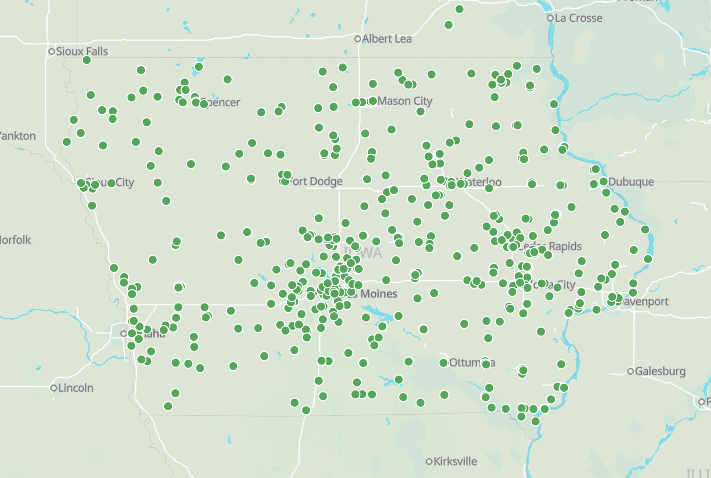
Another concern with the detonation is the effect it could have on livestock and agriculture in the area. Iowa has the second largest agricultural economy in the US, following California and the second most farms in the country at 86,200, following Texas at 229,000.
Officials with Iowa State University Extension and Outreach and the Iowa Beer Center advise farmers to keep livestock indoors during the detonation and cover feed. They also advise not to let animals drink from natural water sources and instead use water tanks.
An assessment of Des Moines County where the facility is located found it “contains over 140,000 acres of active cropland, primarily dedicated to corn and soybean production.”
The Army Corps of Engineers is offering soil sampling services before and after the blast to identify any soil contamination. At this time they have not announced a plan in the case they find contaminated soil.
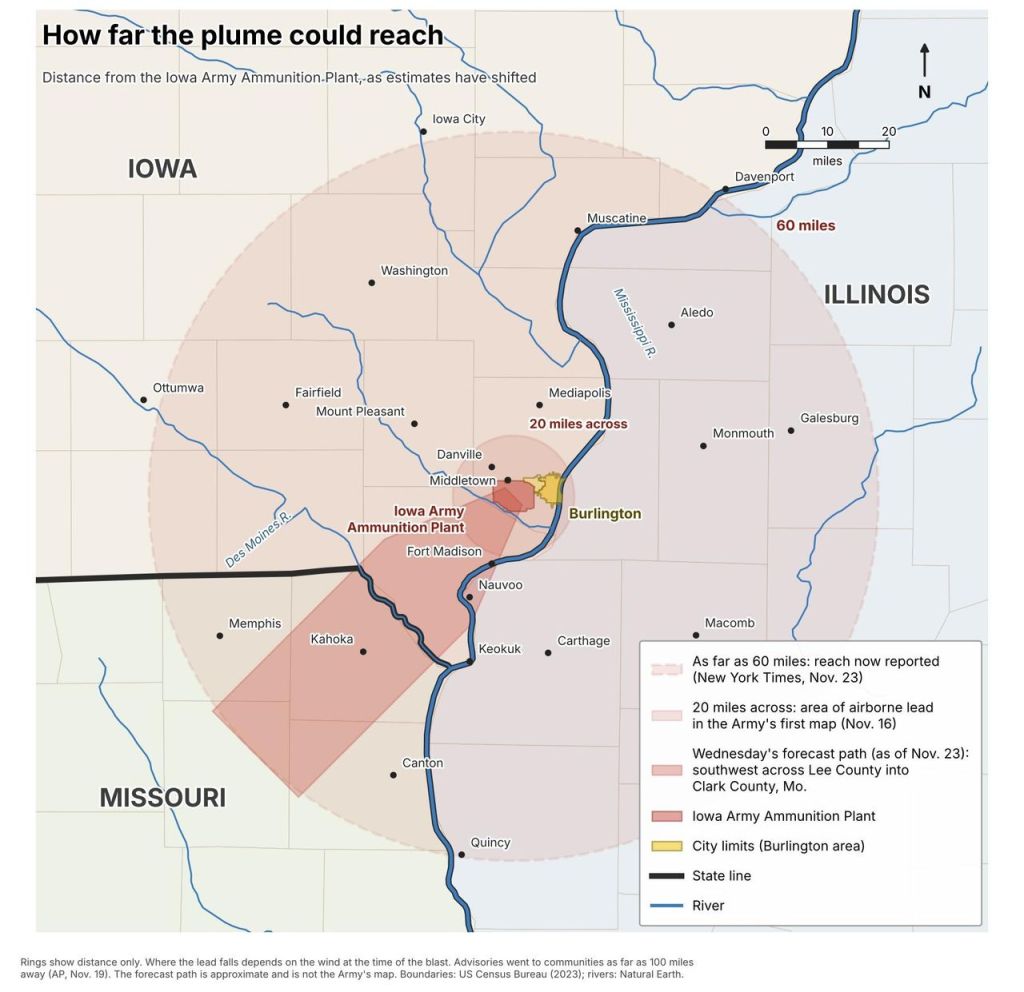
Army models predict the dust cloud from the detonation could spread up to 20 miles north of Middletown into the Burlington and Quad Cities areas. Depending on wind direction, this could change.
The Army says it will update plume maps hourly starting six hours before the detonation and will release an estimated plume map afterward.
Updates and maps can be found here.

